5 Awesome Railway Alternatives
 Lukas Mauser
Railway is the darling of the developer experience world. Beautiful UI, fast deploys, a template marketplace with 1000+ apps, and a visual project canvas that makes infrastructure feel fun. The problem? Usage-based billing that can spiral out of control. No hard spending limits, no permanent free tier, and if your app unexpectedly gets popular (or leaks resources), your bill follows. If you want more cost predictability or just different trade-offs, here are five Railway alternatives worth considering:
| Platform | Pricing Model | Best For | Setup Complexity |
|---|---|---|---|
| Sliplane | Pay-per-server, predictable | Multiple services, fixed costs | Low |
| Render | Per service, free tier available | Simplicity, developer experience | Low |
| Fly.io | Usage-based, global edge | Low-latency global apps | Medium |
| Coolify | Self-hosted, free software | Full control, maximum savings | Medium |
| Kamal | Self-hosted deploy tool, free | Rails teams, zero vendor lock-in | High |
1. Sliplane
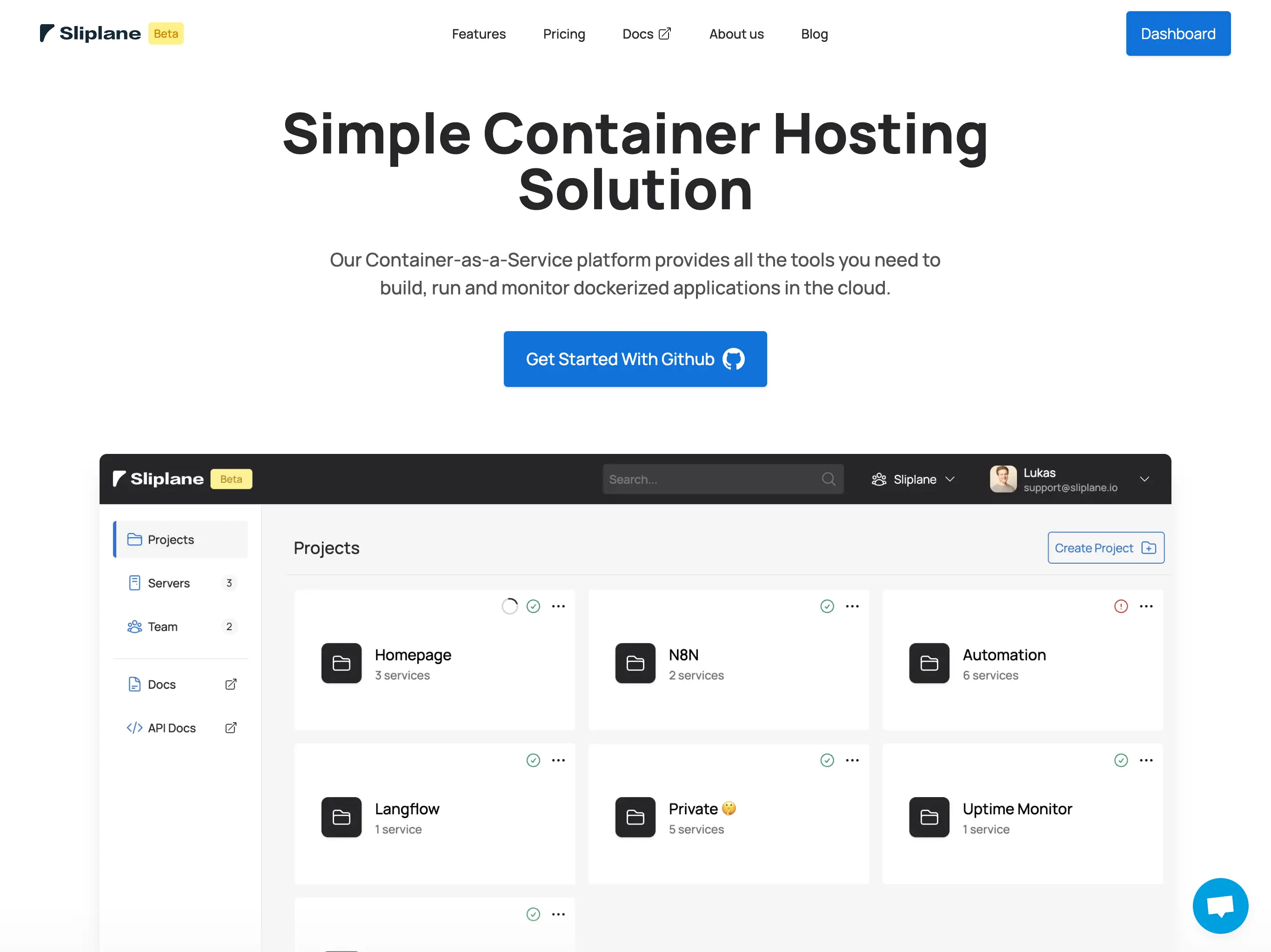
Sliplane takes the opposite approach to Railway's usage-based billing. Instead of paying per resource consumed, you rent a server for a fixed monthly price and run as many containers on it as you want. Frontend, backend, database, Redis, workers, all included for one price starting at €9/month.
Where Railway's bills can surprise you at the end of the month, Sliplane's pricing is completely predictable. You know exactly what you'll pay before you deploy anything. And unlike Railway, there's no risk of accidentally running up a huge bill because of a traffic spike or a misconfigured service.
Advantages over Railway:
- Completely predictable pricing, no usage-based billing surprises
- Unlimited containers per server, deploy your entire stack for one price
- GitHub integration with automatic deployments on push
- 2TB bandwidth included per server
- European data centers with GDPR compliance
- Web UI for everything, no CLI needed
The trade-offs:
- No scale-to-zero or usage-based pricing for low-traffic apps
- No template marketplace like Railway's
- No visual project canvas
- Smaller platform without enterprise certifications
If Railway's billing model gives you anxiety, Sliplane is the antidote. Especially for teams running multiple services, the pay-per-server model can cut costs dramatically. Check out our detailed comparison of Sliplane vs Railway for real cost breakdowns.
2. Render

Render offers a similarly smooth developer experience to Railway but with a more traditional per-service pricing model. Connect a GitHub repo, pick a service type, and you're live. It's one of the closest alternatives in terms of how it feels to use.
Advantages over Railway:
- Free tier for getting started (Railway eliminated theirs)
- Simpler, more predictable per-service pricing
- Managed databases, cron jobs, and background workers built in
- No risk of runaway usage-based bills
- Excellent documentation and onboarding
The downsides:
- Gets expensive fast with multiple services ($7+ per service)
- Cold starts on the free tier can be brutal
- No visual project canvas or template marketplace
- Limited ecosystem compared to Railway's integrations
Render is a solid choice if you want Railway-like simplicity with more predictable costs. Just be aware that the per-service model adds up quickly once you're running a full stack. For more options, see our Render alternatives post.
3. Fly.io
Fly.io is the platform for developers who need their app close to their users worldwide. Like Railway, it uses usage-based billing, but Fly.io's superpower is global edge deployment across 35+ regions. If latency matters to your application, this is hard to beat.
Advantages over Railway:
- Global edge deployment in 35+ regions
- Lower latency for geographically distributed users
- More mature platform with longer track record
- Persistent volumes and built-in Postgres support
- Better suited for latency-sensitive applications
The downsides:
- CLI-heavy workflow, less polished UI than Railway
- Usage-based billing can also be unpredictable
- Steeper learning curve with more complex networking
- The platform has had reliability concerns in the past
Fly.io makes sense if global latency is a priority. If you don't need edge deployment and want simpler billing, a fixed-price platform like Sliplane is likely a better fit. Read more in our Fly.io alternatives post.
4. Coolify
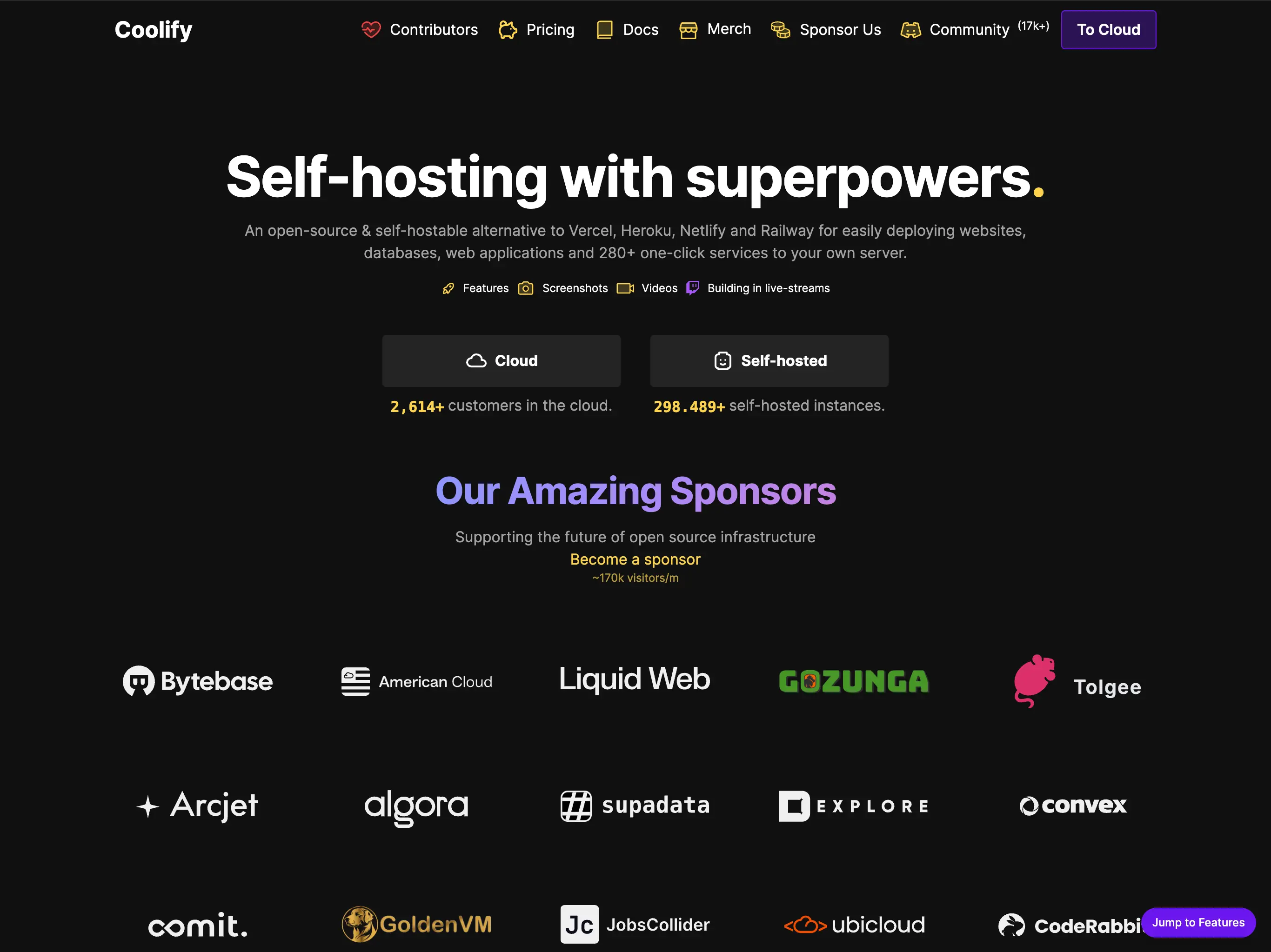
Coolify is the open-source, self-hosted answer to platforms like Railway. Install it on any VPS, and you get a Heroku-like deployment experience with a web UI, Git-based deploys, and support for databases and services, all without paying a platform fee.
Advantages over Railway:
- Completely free and open-source
- No platform fees, just pay for your server ($4-5/month)
- Full control over your infrastructure and data
- No vendor lock-in whatsoever
- Active community with 40k+ GitHub stars
The downsides:
- You handle server maintenance, security updates, and backups
- Requires Linux and Docker knowledge
- Community support only, no dedicated customer service
- Initial setup takes more time than signing up for Railway
Coolify is perfect if you're comfortable with servers and want to eliminate platform costs entirely. The cost savings are significant: what costs $20-30/month on Railway runs on a $5-10/month VPS with Coolify. For more details, see our Coolify alternatives post.
5. Kamal
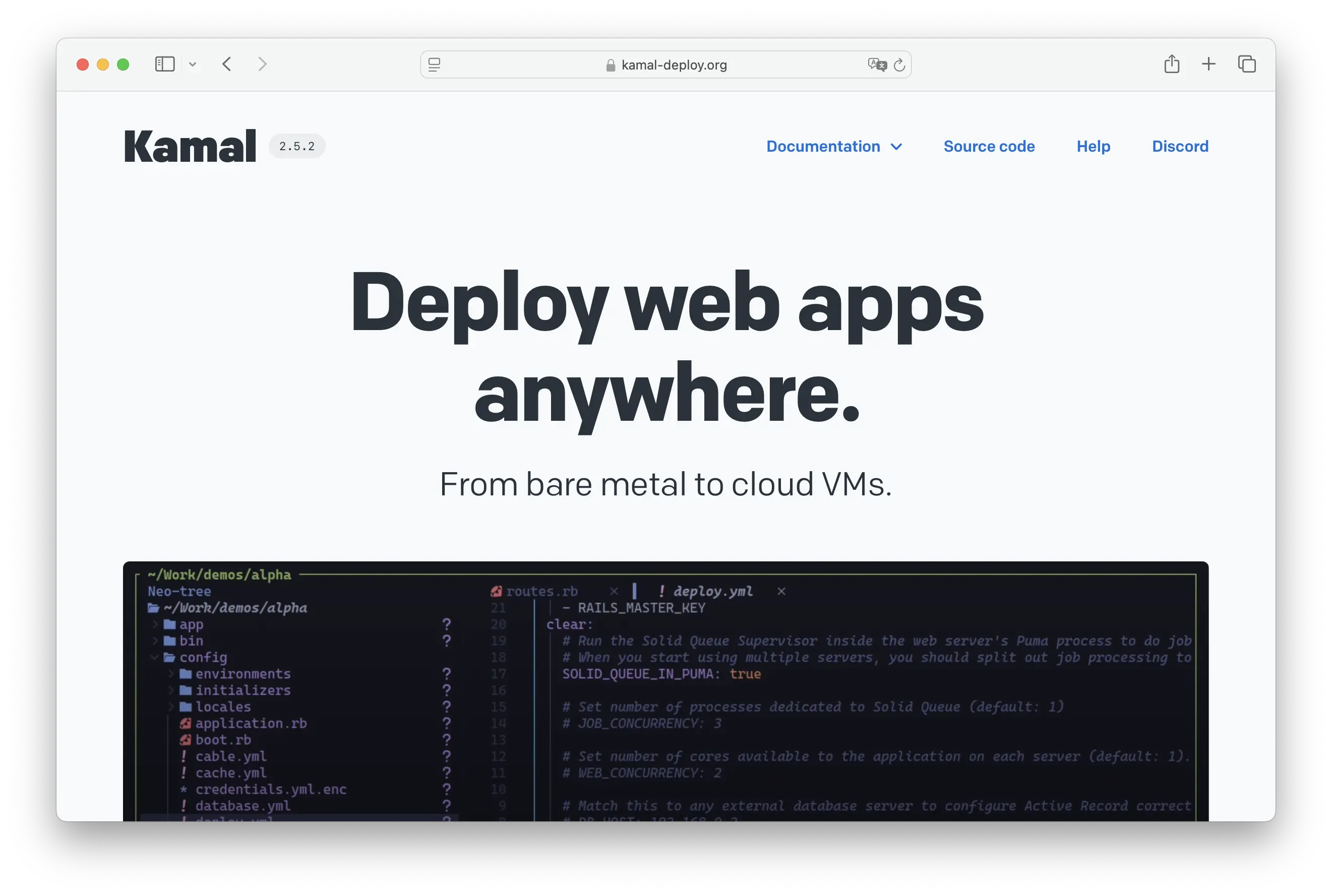
Kamal is a deployment tool built by the creators of Ruby on Rails. It's not a platform, it's a tool that deploys your Docker containers to any server with zero-downtime deploys. If Railway's developer experience impressed you but you want zero vendor lock-in, Kamal delivers.
Advantages over Railway:
- Zero vendor lock-in, deploy to any server, any provider
- No platform fees, just server costs
- Zero-downtime rolling deploys out of the box
- Works with any containerized app, not just Rails
- Full control over your infrastructure
The downsides:
- Requires comfort with the command line and YAML configuration
- No web UI, everything is CLI-driven
- You manage your own servers and infrastructure
- No managed databases or add-ons
- Steeper learning curve than any managed platform
Kamal is the choice for developers who want maximum control and portability. It's especially popular in the Rails community but works with any Docker-based app. If you want Kamal's deploy experience but with a managed server underneath, Sliplane gives you a similar container-first approach with less ops overhead. See our Kamal alternatives post for more options.
Summary
Railway's developer experience is genuinely impressive, but its billing model isn't for everyone.
Choose Sliplane if you want predictable, fixed pricing and the freedom to run unlimited containers without worrying about your bill.
Pick Render if you want a similar developer experience to Railway with per-service pricing and a free tier to get started.
Go with Fly.io if global edge deployment and low latency are critical for your application.
Choose Coolify if you have the technical skills and want to self-host everything for maximum control and minimum cost.
Pick Kamal if you want zero vendor lock-in and are comfortable managing your own servers with a powerful CLI-based deploy tool.