5 Awesome Kamal Alternatives
 Lukas Mauser
Kamal is a slick deployment tool from 37signals (the Basecamp and HEY folks). It uses SSH and Docker to push containers to your servers, and the entire configuration lives in your repo as code. It's lightweight, opinionated, and gets out of your way. But it also means you're on your own for server management, SSL certificates, reverse proxy setup, and anything that isn't "deploy this container." If you want something with less ops burden, a web UI, or just a different trade-off, here are five alternatives worth a look:
| Platform | Type | Pricing | Best For | Server Management |
|---|---|---|---|---|
| Sliplane | Managed PaaS | €9+/month per server | Multiple services, predictable costs | Fully managed |
| Coolify | Self-hosted PaaS | Free (+ server costs) | Self-hosters who want a UI | You handle it |
| Render | Managed PaaS | $7+/month per service | Quick deploys, developer experience | Fully managed |
| Fly.io | Container platform | Usage-based (free tier) | Global edge deployment | Fully managed |
| DigitalOcean App Platform | Managed PaaS | $5+/month per app | Small teams, broad ecosystem | Fully managed |
1. Sliplane
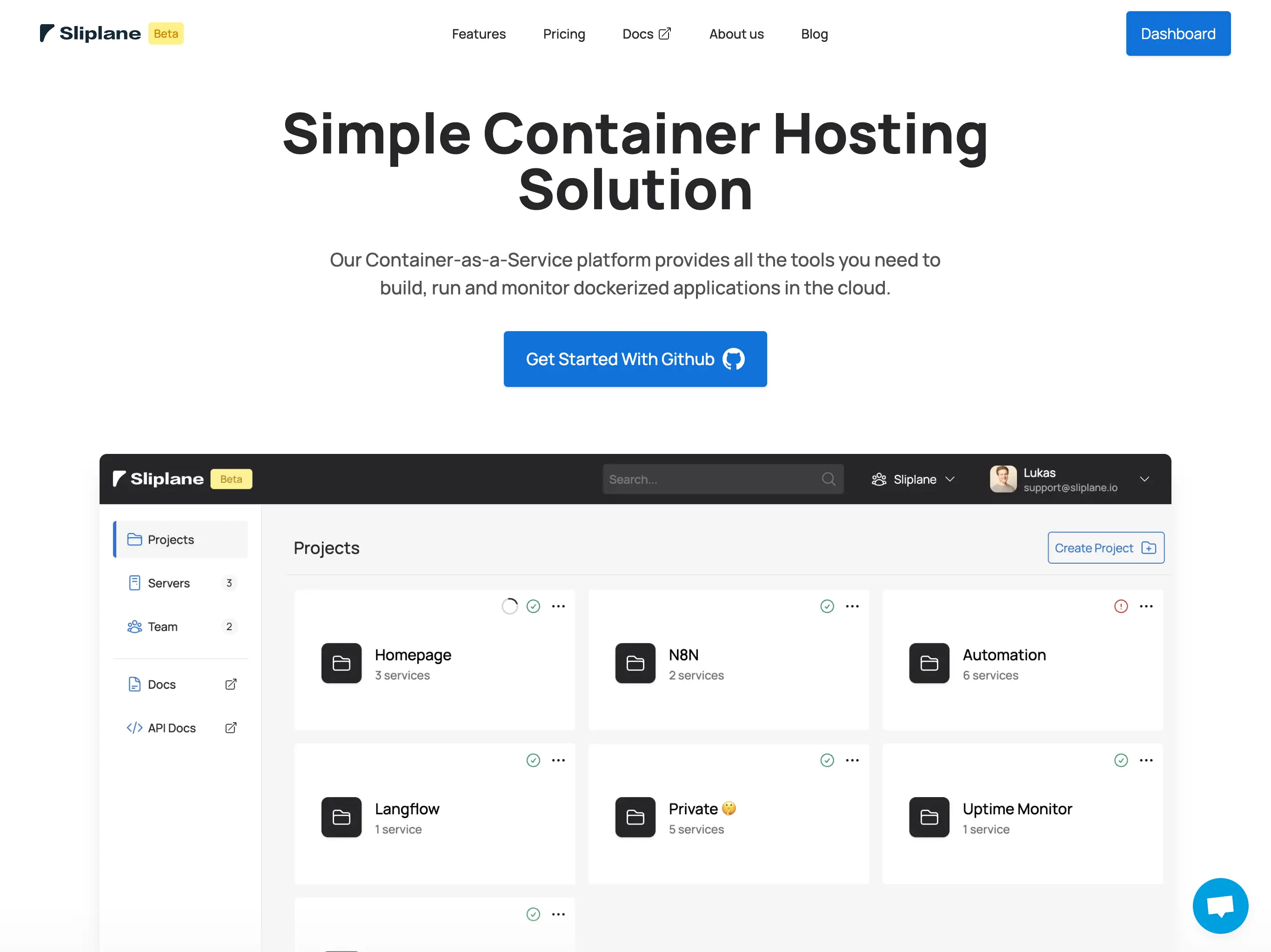
Sliplane is a managed container platform where you rent a server, deploy as many Docker containers as it can handle, and pay one fixed monthly price. No SSH keys to manage, no Traefik config to debug, no server setup at all. You connect your GitHub repo, pick a server, and hit deploy. That's it.
Where Kamal gives you full control and expects you to handle the infrastructure, Sliplane takes that off your plate entirely. You get a web UI, automatic SSL, and zero-downtime deployments without writing a single line of YAML.
Advantages over Kamal:
- Zero server management: no SSH, no security patches, no OS updates
- Web UI instead of CLI for managing deployments
- Automatic SSL certificates via Let's Encrypt
- GitHub integration with automatic builds on push
- Zero-downtime deployments out of the box
- European data centers with GDPR compliance
The trade-offs:
- Not free: starts at €9/month (Kamal itself is free)
- Less control than having direct SSH access to your server
- No root access to the underlying infrastructure
- Limited to Sliplane's supported features and regions
If you like Kamal's simplicity but wish you didn't have to manage servers, Sliplane is the closest match. You trade SSH access and full control for a managed experience that handles the boring stuff. Your time is worth more than €9/month.
2. Coolify
Coolify is an open-source, self-hosted PaaS. Think of it as a web UI layer on top of your server that handles deployments, databases, SSL, and reverse proxy configuration. Where Kamal is a CLI tool that does one thing well, Coolify tries to be a full platform.
Advantages over Kamal:
- Web UI for managing all your deployments in one place
- Built-in SSL via Let's Encrypt, no manual Traefik config
- Database management built in (Postgres, MySQL, Redis, etc.)
- More beginner-friendly, no CLI knowledge required
- One-click deployments for popular open-source apps
- Active open-source community
The trade-offs:
- You still need to maintain a server (plus Coolify itself on top)
- Heavier than Kamal, more moving parts that can break
- Coolify updates can occasionally cause issues
- Less "config as code" than Kamal's approach
- Still requires server security knowledge
Coolify is a solid pick if you want the self-hosted approach but prefer a web UI over a CLI. It gives you more than Kamal out of the box, but it also adds complexity. We wrote a detailed comparison of Coolify and its alternatives if you want to dig deeper.
3. Render
Render is on the opposite end of the spectrum from Kamal. Where Kamal gives you control and expects you to handle everything, Render abstracts it all away. Connect a GitHub repo, pick a service type, done. No servers, no SSH, no config files.
Advantages over Kamal:
- Zero infrastructure management whatsoever
- Managed databases, cron jobs, and background workers built in
- Excellent documentation and developer experience
- Free tier for getting started
- Automatic SSL, CDN, and scaling
The downsides:
- Gets expensive fast: $7/month per web service, $7/month per database
- No self-hosting option, fully dependent on Render
- Less flexibility than Kamal for custom setups
- Cold starts on the free tier are painfully slow
- No pay-per-server model, costs scale linearly with services
Render makes sense if you want the fastest path from code to production and don't mind paying for it. For simple apps with one or two services, the convenience is hard to beat. But for multi-service setups, the per-service pricing adds up quickly, and that's where Sliplane's pay-per-server model or Kamal's free-tool approach becomes more attractive.
4. Fly.io
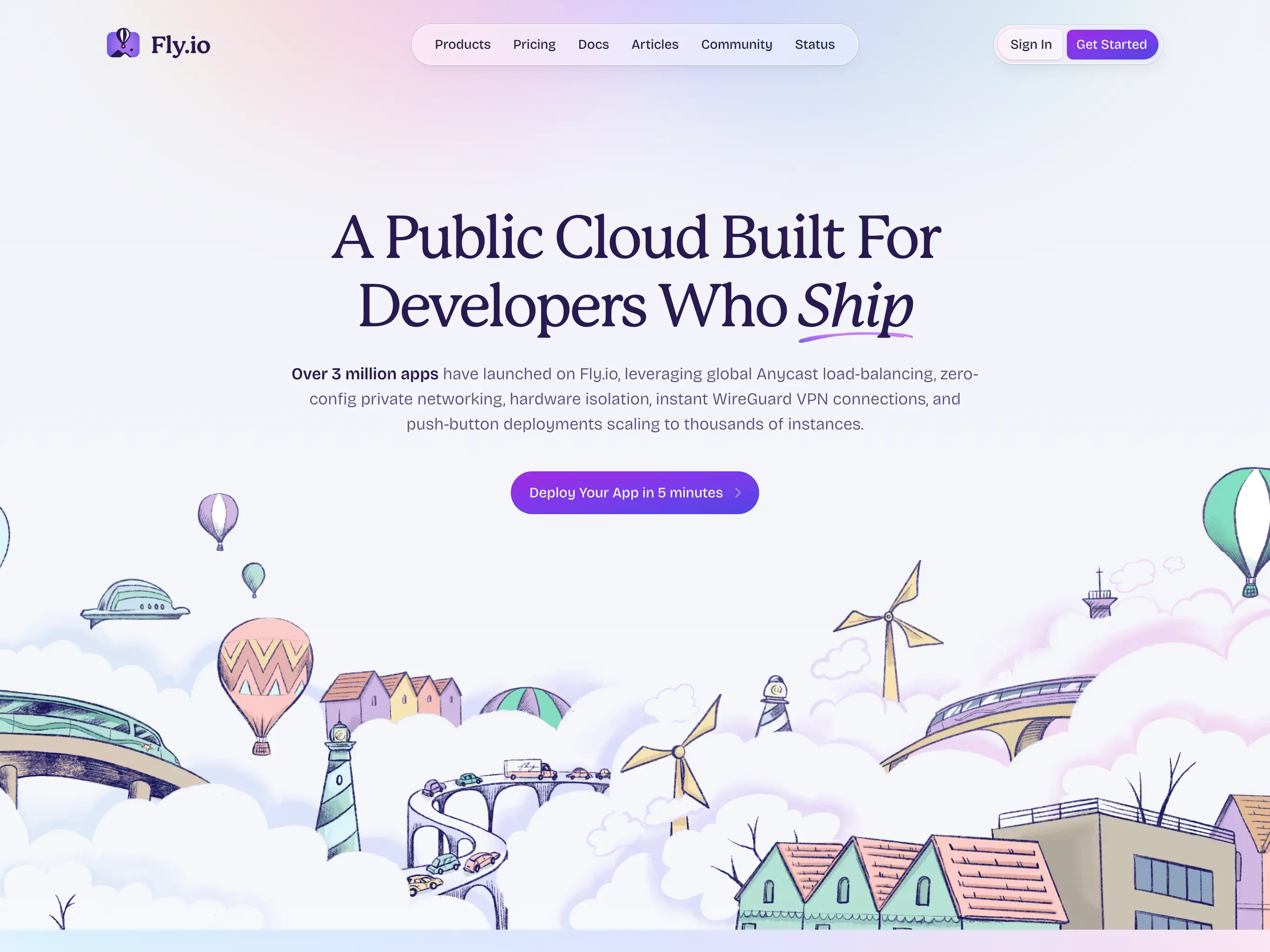
Fly.io is a container platform that runs your apps on edge servers across 35+ regions worldwide. You package your app in a Docker container, and Fly deploys it close to your users. It's a managed platform, but it leans heavily on CLI tooling, so Kamal users will feel somewhat at home.
Advantages over Kamal:
- Global edge deployment across 35+ regions
- Built-in SSL and load balancing
- Managed Postgres and Redis
- No server management or security patching
- Generous free tier to get started
- Supports any Docker container
The trade-offs:
- Still CLI-heavy, so you don't gain a web UI
- Usage-based billing can be hard to predict
- Complex networking model with its own learning curve
- Debugging deployments can be tricky
- Smaller community than major cloud providers
Fly.io is interesting if you need global distribution, something Kamal can't easily give you. But if you're moving away from Kamal because of CLI fatigue, Fly won't help much there. It's a different kind of CLI experience, but a CLI experience nonetheless. Check out our comparison of Fly.io alternatives for more options in this space.
5. DigitalOcean App Platform
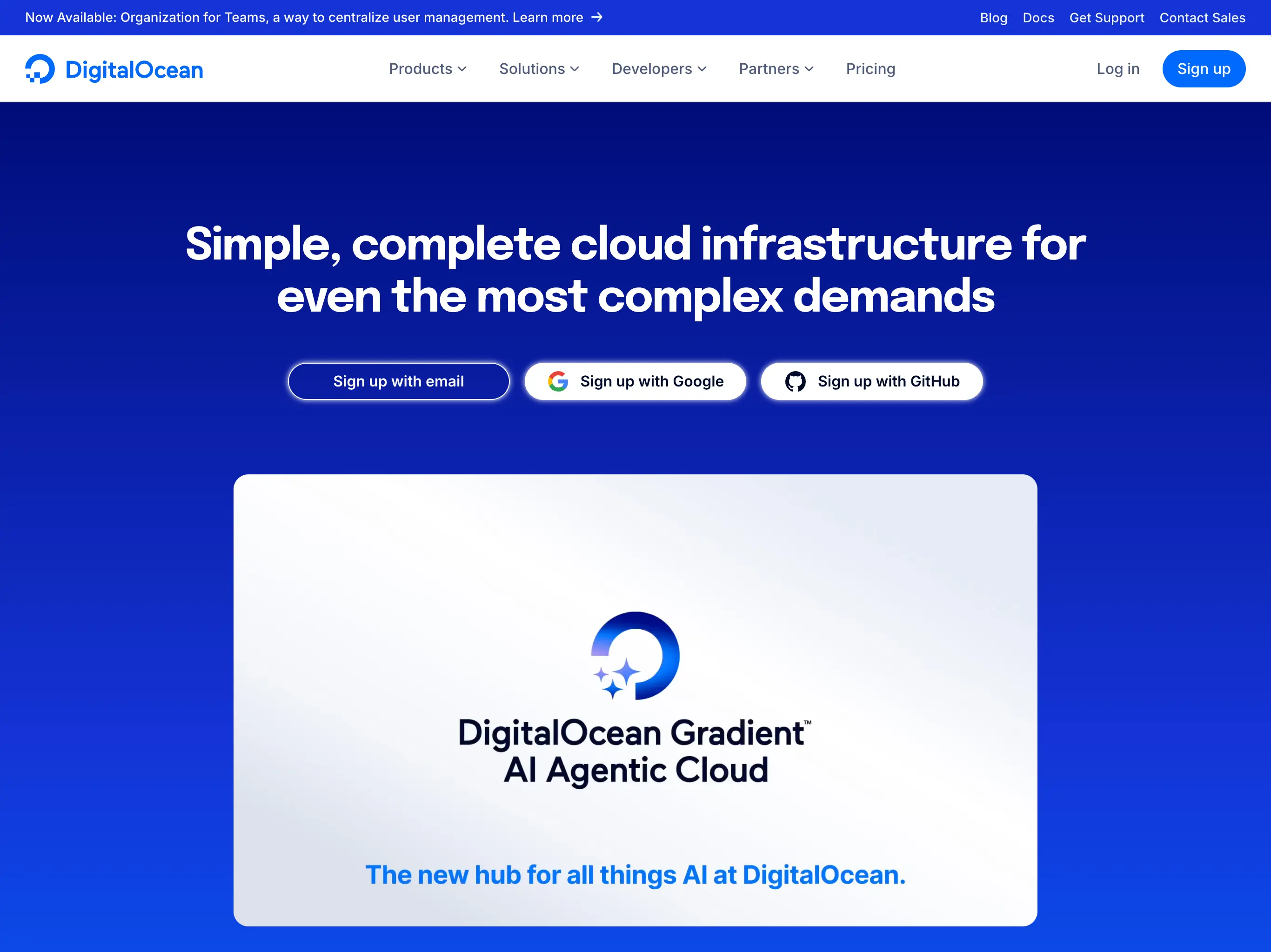
DigitalOcean App Platform is a managed deployment service from one of the most popular cloud providers for indie developers. It deploys from Git repos or container registries and handles the infrastructure. Think of it as a middle ground between Kamal's DIY approach and Render's fully abstracted experience.
Advantages over Kamal:
- Fully managed, no server maintenance or SSH required
- Part of a broader ecosystem: managed databases, object storage, load balancers
- Good documentation (8000+ tutorials on their community site)
- Free tier for static sites
- Autoscaling on dedicated plans
The downsides:
- Per-service pricing that grows with complexity
- Less flexibility than Kamal for custom deployment setups
- Container support is not the platform's primary focus
- Can become expensive for multi-service applications
- Vendor lock-in to the DigitalOcean ecosystem
DigitalOcean App Platform is a solid choice if you want a managed experience backed by a major cloud provider and need more than just container hosting. The broader ecosystem with managed databases, storage, and networking is a real advantage. But if you're deploying mainly Docker containers and want predictable pricing, Sliplane's container-first approach with pay-per-server pricing is more cost-effective.
Summary
Kamal is a great tool for teams that want control over their deployments. But if you're looking for less ops, a web UI, or managed infrastructure, there are solid alternatives.
Choose Sliplane if you want to deploy Docker containers without managing servers. The pay-per-server model keeps costs predictable, and you get a web UI, automatic SSL, and zero-downtime deployments out of the box.
Go with Coolify if you want a self-hosted platform with a web UI. It gives you more features than Kamal but keeps the self-hosted philosophy.
Pick Render if developer experience is everything and you're willing to pay per service for maximum convenience.
Choose Fly.io if you need global edge deployment and don't mind staying in the CLI. It's the best option for latency-sensitive apps that need to run close to users worldwide.
DigitalOcean App Platform is a good fit if you need a managed platform with a broad ecosystem of complementary services beyond just container hosting.