
5 Awesome Fly.io Alternatives
 Lukas Mauser
Fly.io made a name for itself by making global edge deployments accessible. Deploy your app once, run it in 35+ regions, enjoy low latencies worldwide. Sounds great on paper, but in practice many developers find themselves fighting with CLI-only workflows, complex networking setups, and usage-based bills that are hard to predict. If you're looking for simpler, cheaper, or just different ways to deploy your containers, here are five solid alternatives:
| Platform | Pricing Model | Best For | Setup Complexity |
|---|---|---|---|
| Sliplane | Pay-per-server, predictable | Cost-effective hosting, multiple services | Low |
| Google Cloud Run | Pay-per-use, serverless | Serverless containers, Google ecosystem | Medium |
| Render | Per service, free tier then steep increase | Simplicity, developer experience | Low |
| Digital Ocean App Platform | Per app, straightforward | Small teams, simple projects | Low |
| Coolify | Self-hosted, cheapest option | Full control, DevOps teams | Medium |
1. Sliplane
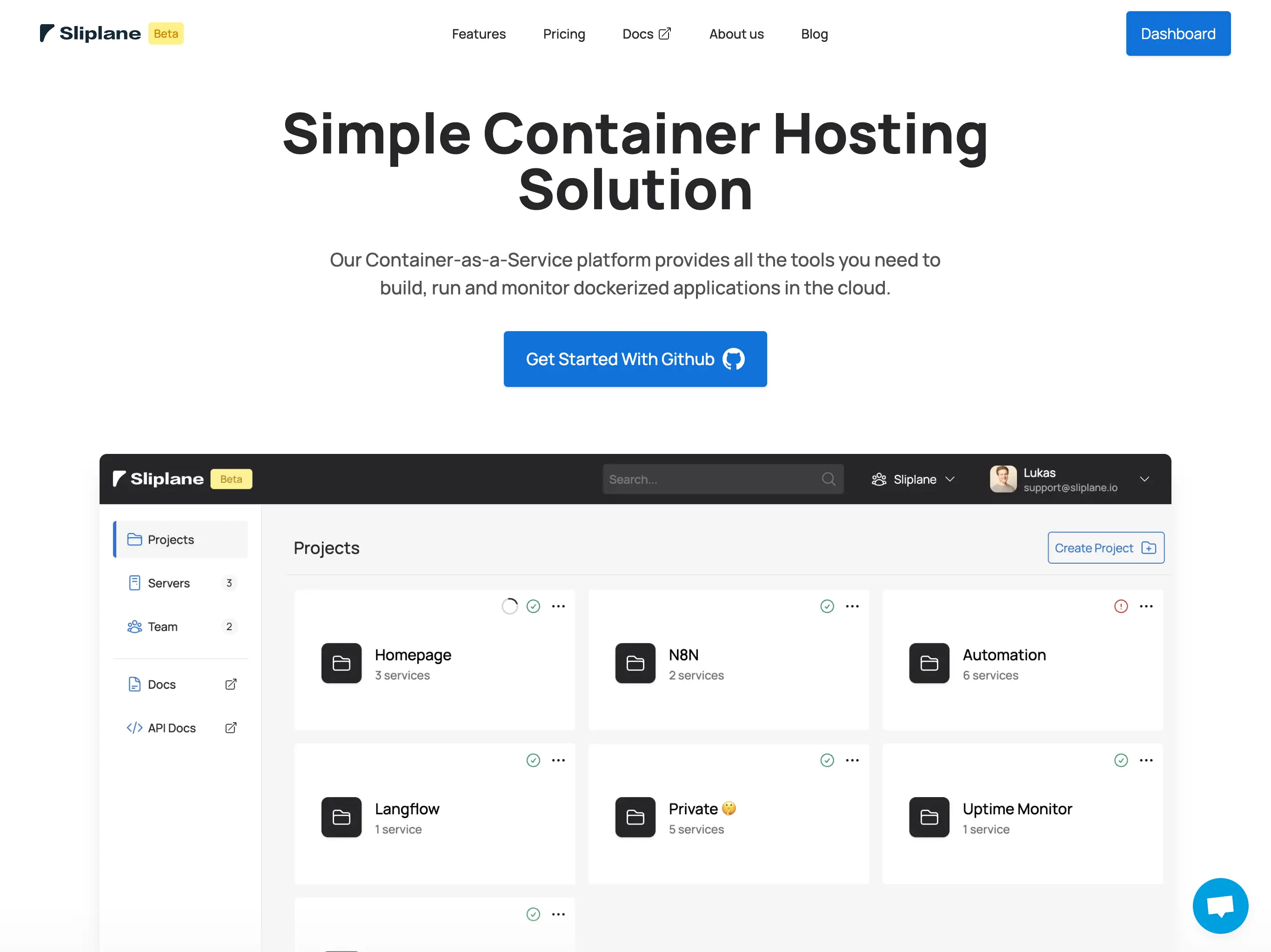
Sliplane is a European PaaS provider built around containers. Like Fly.io, you can deploy any Docker container, but the approach is fundamentally different: instead of usage-based billing across a global network, you rent a server for a fixed monthly price and run as many containers on it as you want.
Advantages over Fly.io:
- Predictable pricing: no per-second billing, no bandwidth charges, no surprise bills
- Pay-per-server model: deploy frontend, backend, database, and cache for one price
- GitHub integration with automatic deployments on push
- Web UI for everything, no CLI required
- 2TB bandwidth included per server
- European data centers with GDPR compliance
The trade-offs:
- No global edge deployment, your app runs in one region
- No scale-to-zero
- Limited scalability compared to Fly.io's global network
- Smaller platform without enterprise certifications
If you don't need global distribution and want predictable costs, Sliplane is a great fit. Especially for teams running multiple services, the pay-per-server model can save a lot compared to Fly.io's per-machine billing. Check out our detailed comparison of Sliplane vs Fly.io for real cost breakdowns.
2. Google Cloud Run
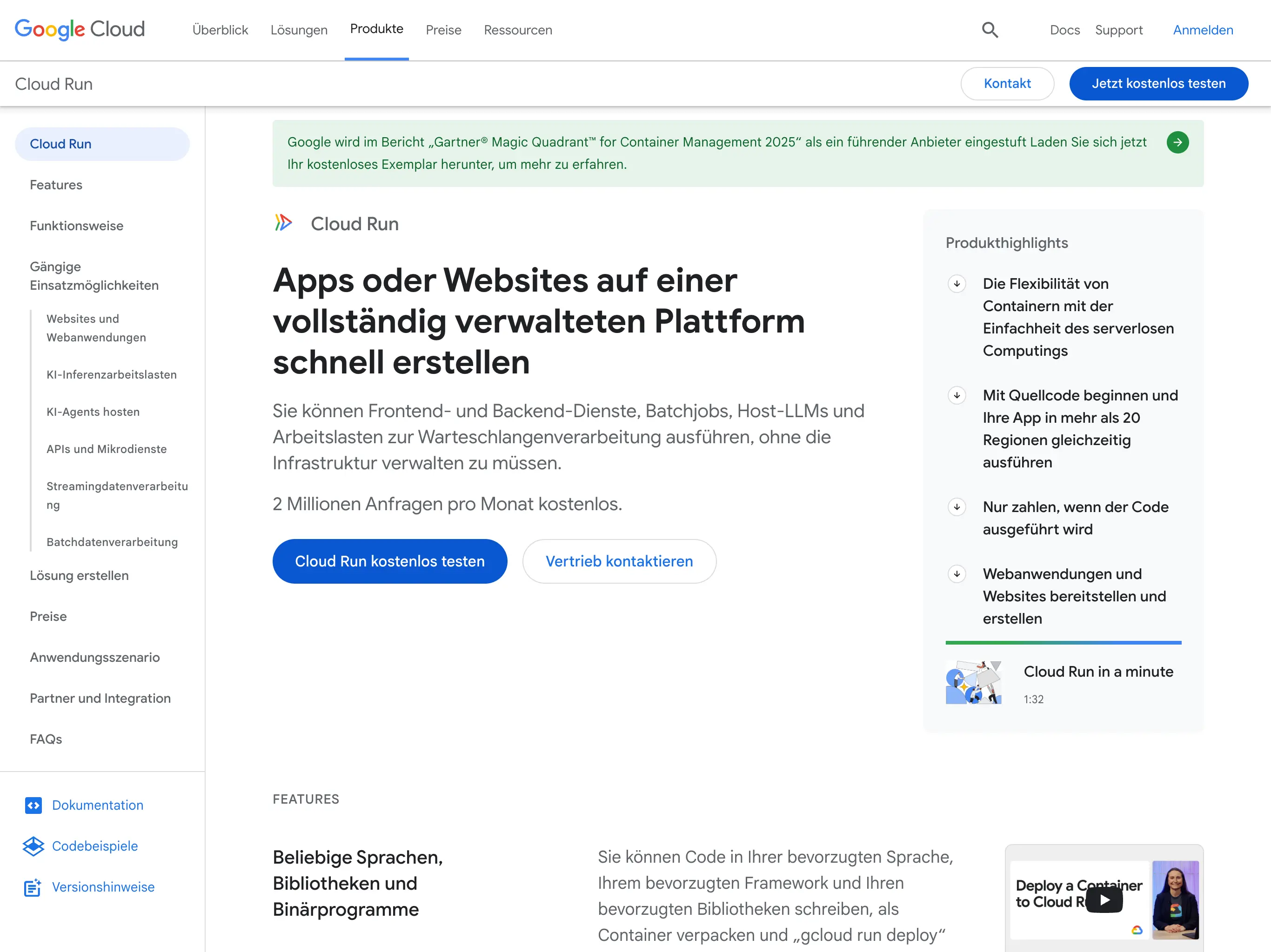
Google Cloud Run is Google's serverless container platform and arguably the most polished serverless container experience out there. If you liked Fly.io's container-first approach but want true serverless with scale-to-zero, Cloud Run is worth a serious look.
Advantages over Fly.io:
- True scale-to-zero: pay nothing when your app is idle
- Faster cold starts than most serverless competitors
- No CLI-only workflow, deploy from Console, CLI, or CI/CD
- Deep integration with Google Cloud services
- Instance-based pricing option for long-running apps
The downsides:
- Cold starts can impact latency-sensitive apps
- Google Cloud ecosystem can feel overwhelming
- Less control over infrastructure compared to Fly.io
- No built-in global edge deployment (though you can deploy to multiple regions manually)
Google Cloud Run is a strong choice if you want serverless containers with solid autoscaling. The pricing can be competitive for apps with variable traffic, but for steady workloads, a fixed-price option like Sliplane often comes out cheaper. For a deeper dive, check out our Google Cloud Run alternatives post.
3. Render
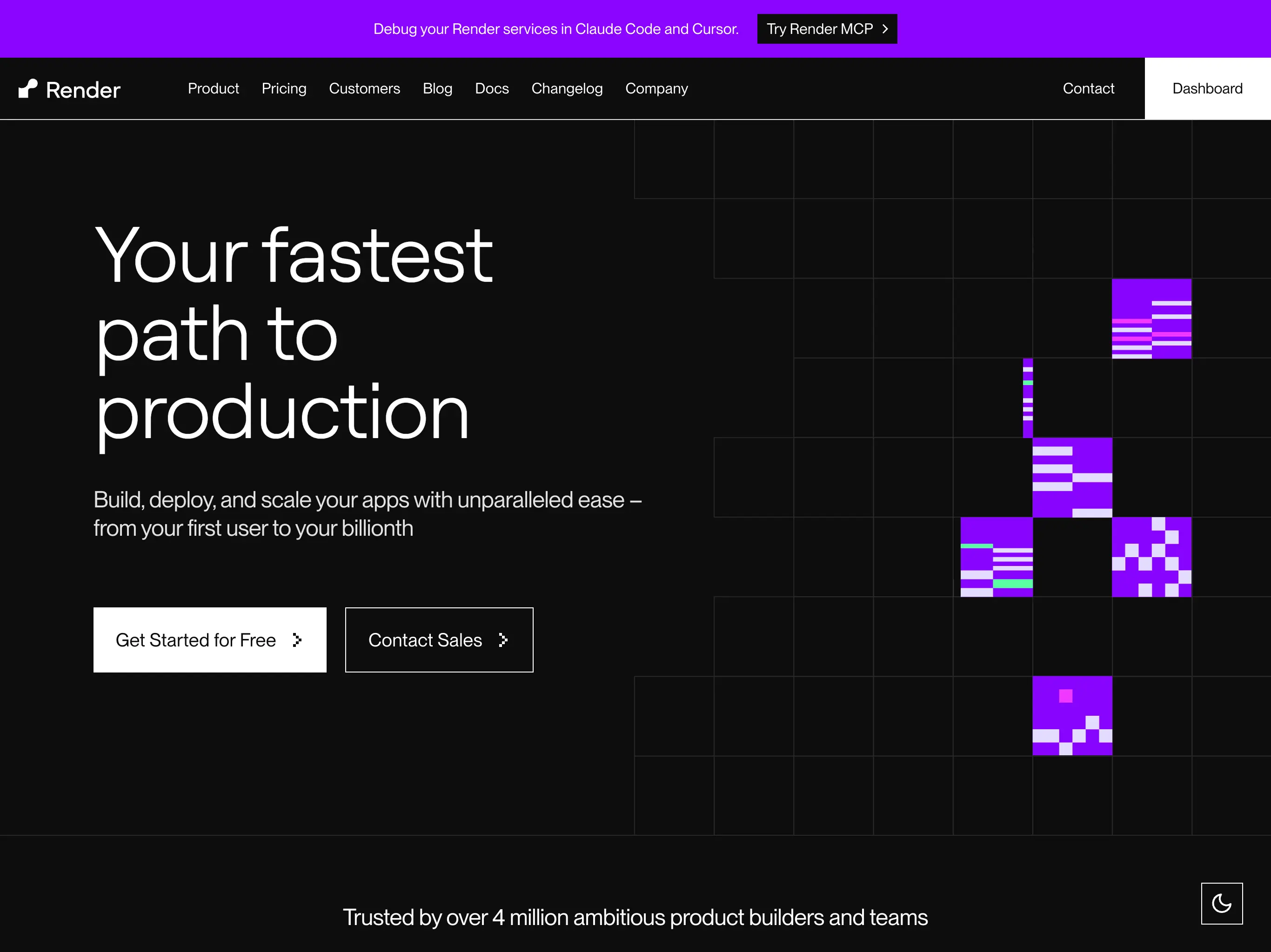
Render offers one of the smoothest deployment experiences around. Connect a GitHub repo, pick a service type, and you're live. If Fly.io's CLI-heavy workflow has been frustrating you, Render's web-first approach is refreshing.
Advantages over Fly.io:
- Excellent developer experience with intuitive UI
- Simple git-based deployments, no CLI required
- Managed databases, cron jobs, and background workers built in
- Free tier for getting started
- Overall easier to learn and use
The downsides:
- Gets expensive fast once you leave the free tier ($7+ per service)
- No global edge deployment
- Cold starts on the free tier can be brutal
- Limited ecosystem compared to major cloud providers
Render is a solid choice if developer experience is your top priority and you don't mind paying a premium for convenience. For multi-service setups, costs add up quickly though, which is where alternatives with per-server pricing have an advantage. We also have a detailed comparison of Render alternatives if you want to dig deeper.
4. Digital Ocean App Platform
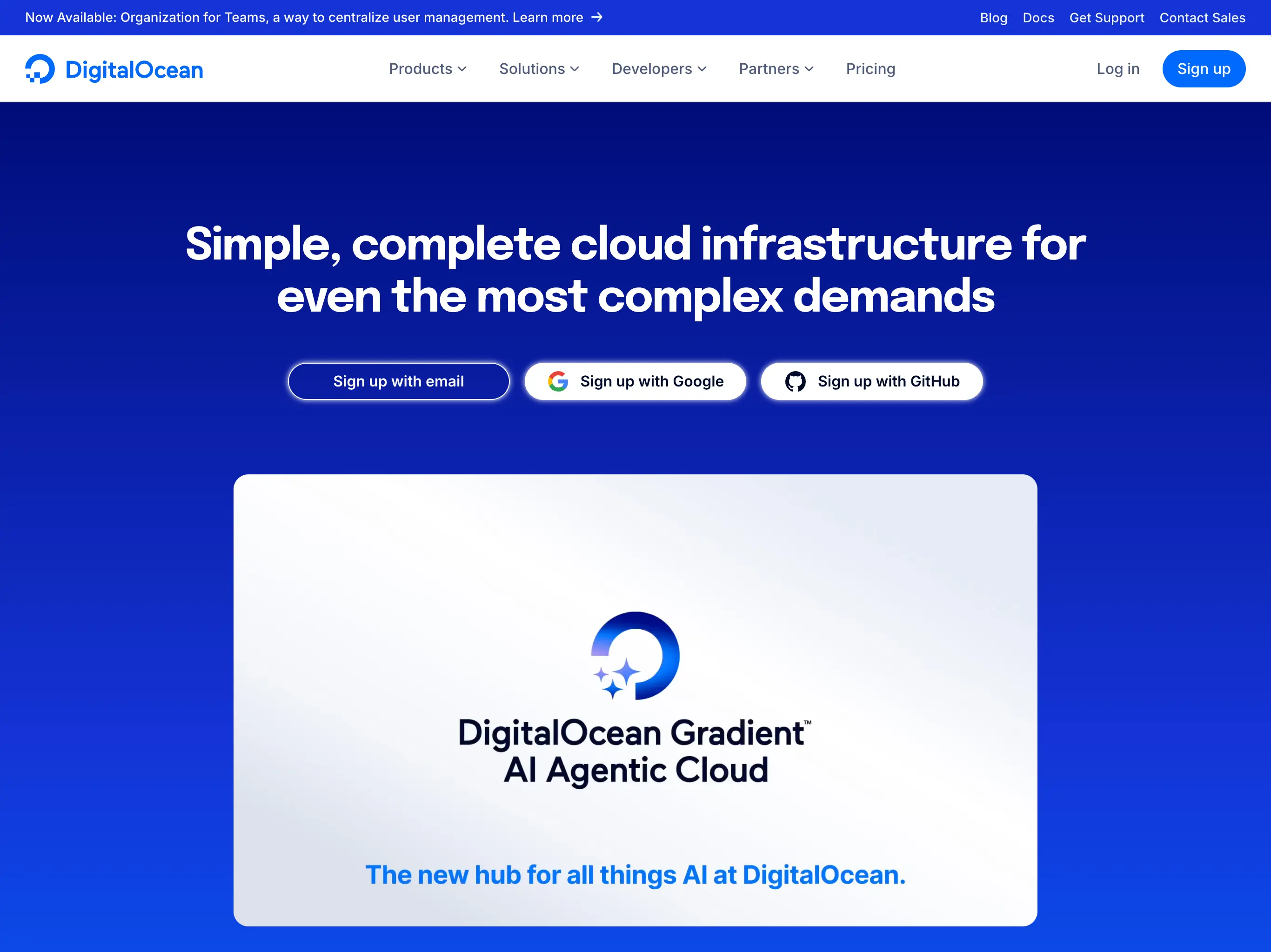
Digital Ocean App Platform sits somewhere between the simplicity of Render and the flexibility of managing your own infrastructure. It's a managed platform that deploys from Git repos or container registries, backed by Digital Ocean's solid infrastructure.
Advantages over Fly.io:
- Simpler setup and deployment process
- Part of a broader ecosystem (Droplets, managed databases, object storage)
- Reasonable pricing with a free tier for static sites
- Autoscaling available on dedicated plans
- Good documentation with 8000+ tutorials
The downsides:
- Not as cheap as it looks, costs rise quickly with multiple services
- No global edge deployment like Fly.io
- Autoscaling is less responsive than serverless platforms
- Container support is not the primary focus
Digital Ocean App Platform is a good middleground for teams that want managed deployments without getting locked into a hyperscaler. If you're already using Digital Ocean for other things, it integrates nicely. Check out our Digital Ocean alternatives post for more comparisons.
5. Coolify
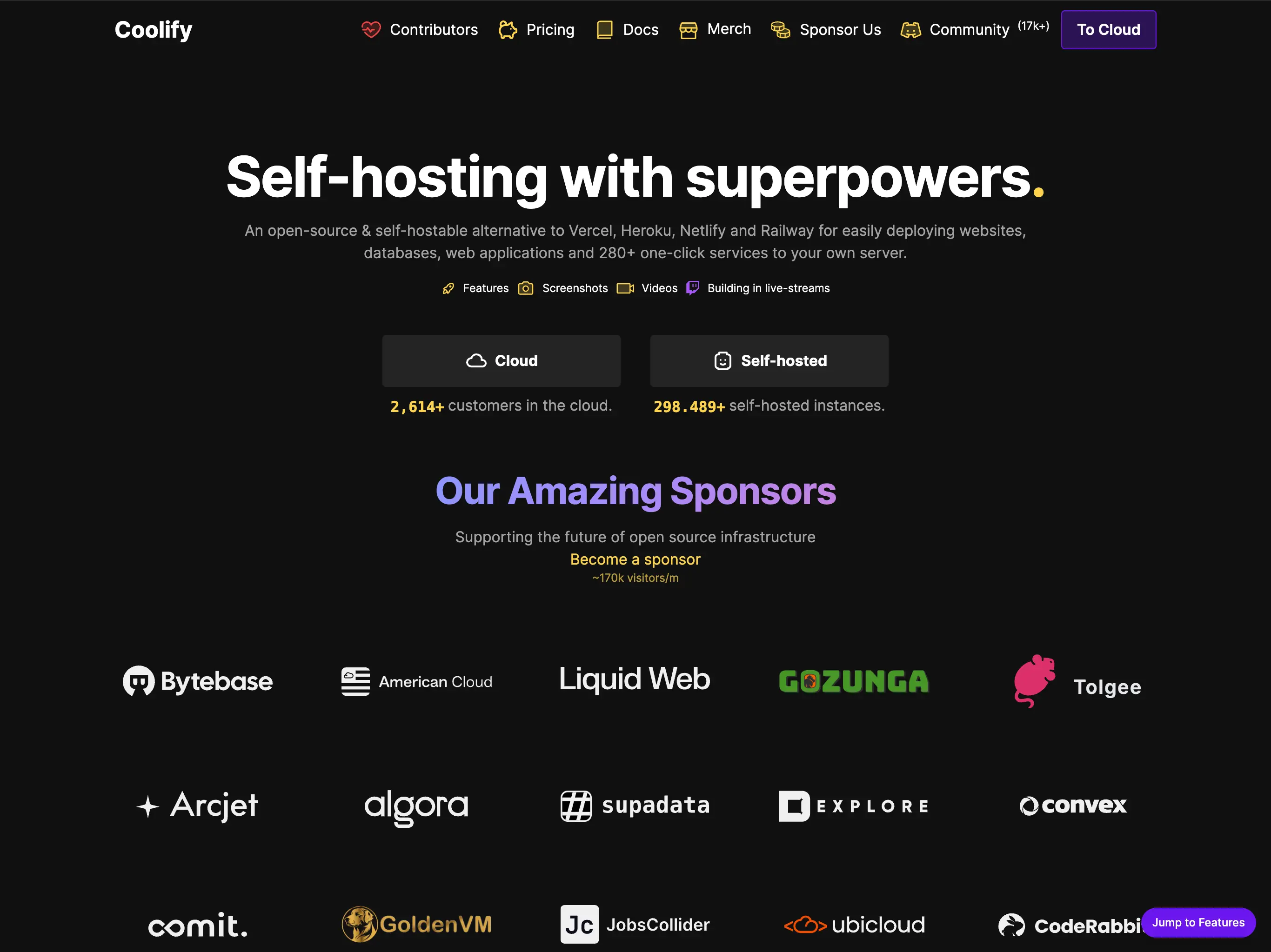
Coolify takes a completely different approach. It's an open-source, self-hosted platform that you install on your own server. Think of it as running your own mini-PaaS. If Fly.io's pricing has been bothering you, Coolify eliminates the platform cost entirely.
Advantages over Fly.io:
- Completely free and open-source
- Deploy on any server, any provider, your choice
- No vendor lock-in whatsoever
- Full control over your infrastructure
- Active community with 40k+ GitHub stars
The downsides:
- You handle server provisioning, security updates, and maintenance
- Requires Linux and Docker knowledge
- No managed support (community-driven)
- No global edge deployment out of the box
Coolify is perfect for developers who want maximum control and don't mind investing time in infrastructure. The cost savings can be significant: your only expense is the VPS itself (as low as $4-5/month). But if you'd rather focus on building your product than managing servers, a managed alternative like Sliplane gives you similar cost efficiency without the maintenance overhead.
Summary
Fly.io is a powerful platform, but its complexity and unpredictable pricing aren't for everyone.
Choose Sliplane if you want simple, predictable pricing and don't need global edge deployment. The pay-per-server model is hard to beat for running multiple services.
Go with Google Cloud Run if you want true serverless with scale-to-zero and are comfortable in the Google ecosystem.
Pick Render if developer experience is your top priority and you don't mind paying a premium for simplicity.
Digital Ocean App Platform is a solid choice if you're already in the Digital Ocean ecosystem and want a managed deployment experience.
Choose Coolify if you have the technical chops and want to self-host everything for maximum control and minimum cost.