
Docker Swarm vs Kubernetes
 Jonas Scholz
If you have used Docker, you have probably heard of Kubernetes. Docker Engine also includes its own cluster manager: Swarm mode. Both can keep containers running across several machines, but they ask different amounts of work from you.
What Kubernetes does
Kubernetes runs workloads as Pods and uses controllers to keep the actual state close to the state you declared. A Deployment can maintain a number of replicas, replace failed Pods, and roll out a new version.
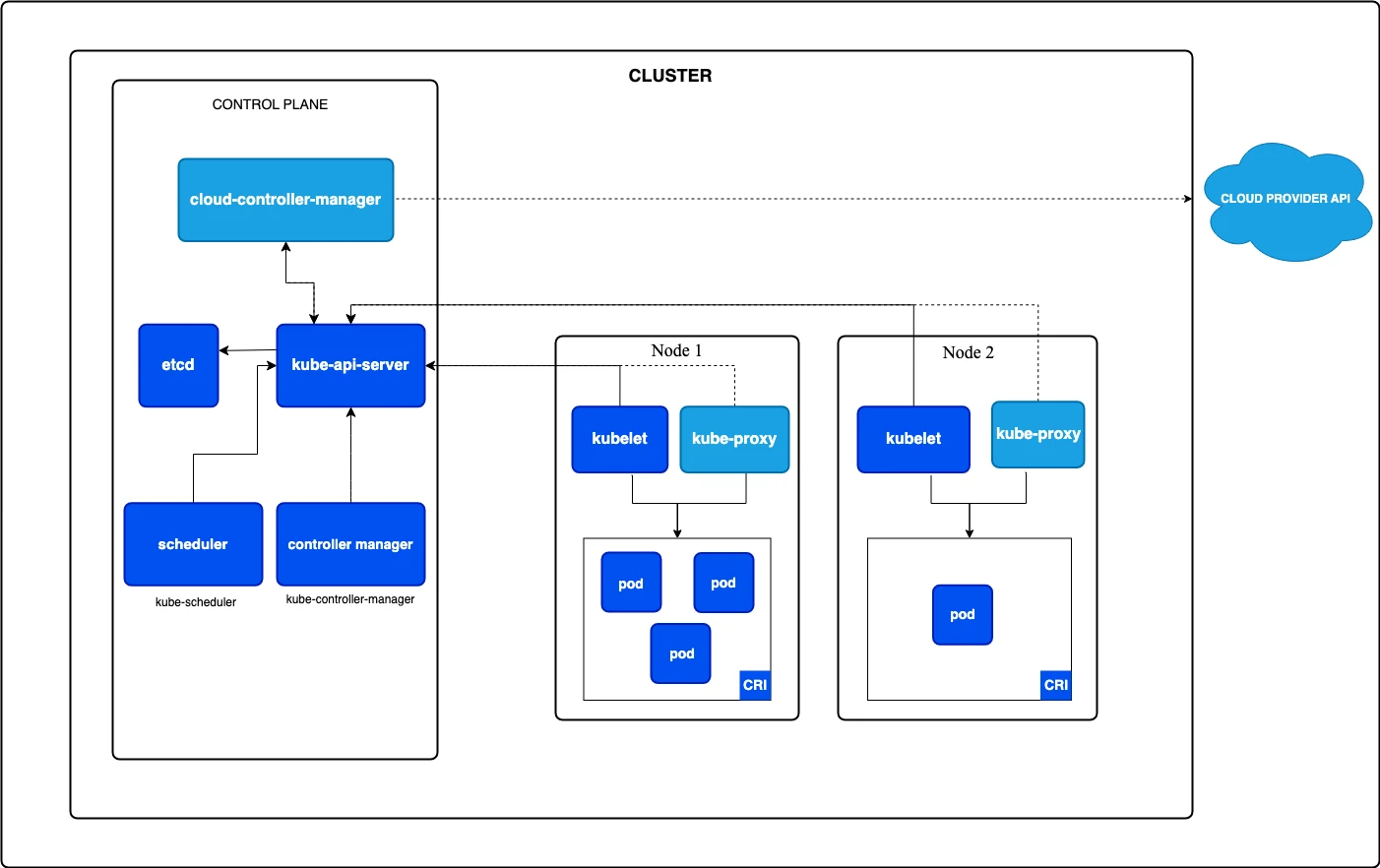
Diagram source: Kubernetes cluster architecture.
Its main advantage is the range of tools built around it. Managed clusters, operators, policy tools, and monitoring integrations can cover requirements that would otherwise need custom work. That is useful when you have several teams or infrastructure requirements beyond running a few services.
You still need to operate the system. A managed control plane removes part of that job, but your team owns workload configuration, resource requests, access controls, upgrades, and the behavior of the applications.
What Docker Swarm does
Swarm mode is built into Docker Engine. Manager nodes maintain cluster state and schedule service tasks on nodes. You define services and replica counts with Docker's CLI.
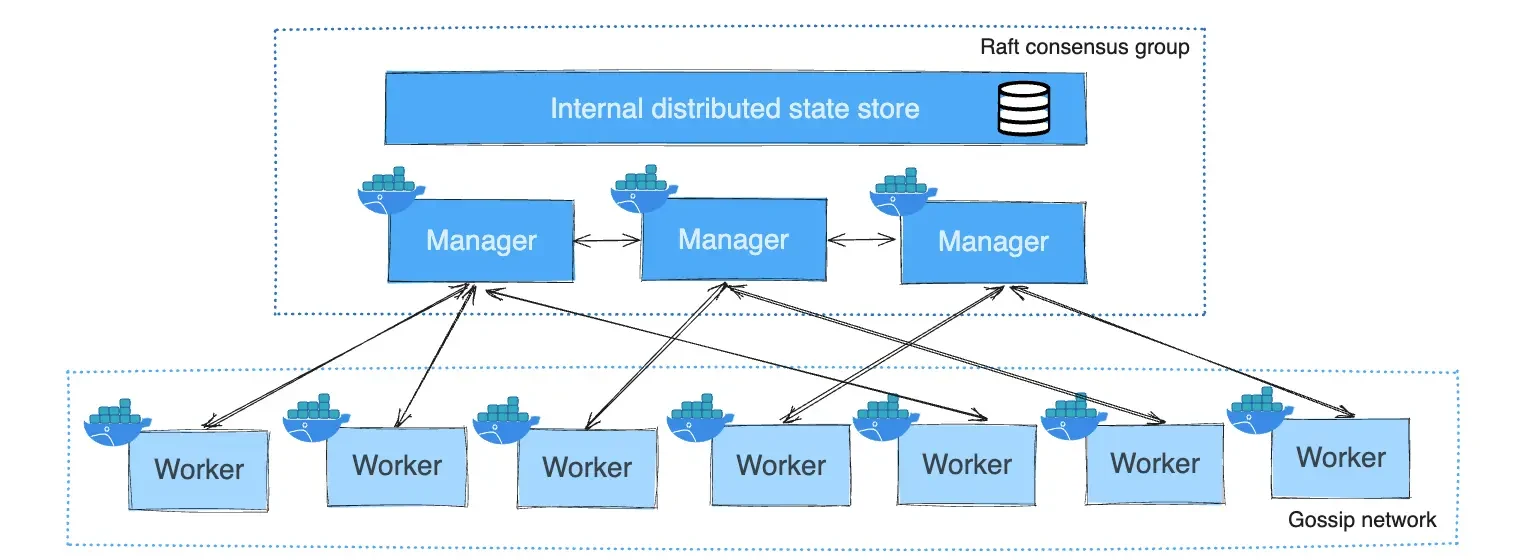
Diagram source: Docker Swarm nodes.
The setup is smaller, and the concepts are close to what you already use with Docker. Swarm can replace failed tasks, perform rolling updates, and route requests to service replicas. You do not need a separate Kubernetes control plane to use those features.
The trade-off is a smaller ecosystem and fewer ready-made integrations. If your team depends on Kubernetes operators or policies, Swarm will not be a drop-in replacement. Swarm mode is still documented as part of Docker Engine; describing it as unmaintained is not a sound reason to dismiss it.
Where the differences matter
- Setup: Swarm is included in Docker Engine. Kubernetes needs a separate cluster platform or a managed cluster.
- Scaling: Both let you set replica counts. Kubernetes has autoscaling controllers when configured; automatic scaling in Swarm needs additional tooling.
- Networking: Swarm provides service discovery and an ingress routing mesh. Kubernetes uses Services, cluster networking, and configurable external traffic handling.
- Extensions: Swarm has a smaller selection of integrations. Kubernetes has a broad operator and controller ecosystem.
- Operations: Swarm has fewer concepts, but it is still a cluster to maintain. Kubernetes adds more configuration and operational choices.
Both support distributing traffic. Kubernetes Services can distribute traffic across endpoints; an externally reachable LoadBalancer Service needs an implementation from the environment. It is incorrect to say Kubernetes has no built-in load balancing at all. See the Kubernetes Service documentation.
Swarm's routing mesh lets a node accept traffic on a published service port and route it to a task. You still need to plan how outside traffic reaches your nodes.
Neither option turns a database into a highly available database just because its container can restart elsewhere. Storage, backups, failure recovery, and data replication need their own design.
Which would I choose?
For a small team that needs several hosts and already knows Docker, I would consider Swarm if its features cover the workload. Fewer components can mean less time spent on the platform.
I would choose Kubernetes when the requirements justify its ecosystem, or when the team already operates it well. Adopting it only because a future version of the product might need it means paying the operational cost today.
For a handful of apps, I would first ask whether I need to run a cluster at all. A single server or a managed container service may be enough. That is also why we built Sliplane: you deploy the container without taking on a cluster's day-to-day operation.

