
5 Awesome Seafile Alternatives in 2026
 Lukas Mauser
Seafile is one of the fastest self-hosted file sync platforms out there. It handles large files like a champ, syncs reliably, and stays lightweight on resources. But if you need more than just file sync -- think office documents, calendars, contacts, or a full collaboration suite -- Seafile starts to feel limited. The UI is functional but not exactly modern, and the community is smaller than some of the bigger players.
If you're looking for something that goes beyond pure file sync, here are five alternatives worth checking out. And if you want to self-host any of them without the headache, you can deploy them on Sliplane for just €9/month.
Quick Picks for 2026
- Best Seafile alternative for collaboration: Nextcloud, when office docs, calendars, and apps matter.
- Best lighter central server: ownCloud Infinite Scale, if you want file management without Nextcloud's full app ecosystem.
- Best no-server option: Syncthing, for private device-to-device sync.
- Best compliance-heavy option: Pydio Cells or FileCloud, depending on whether open source is a requirement.
| Option | Best for | Hosting fit |
|---|---|---|
| Seafile | Fast file sync | Sliplane, VPS, or dedicated storage server |
| Nextcloud | Full collaboration suite | Sliplane, VPS, or enterprise hosting |
| ownCloud | Focused file sharing | VPS or managed provider |
| Syncthing | P2P sync | Personal devices or always-on node |
| Pydio/FileCloud | Compliance workflows | Larger VPS, Kubernetes, or enterprise deployment |
1. Nextcloud
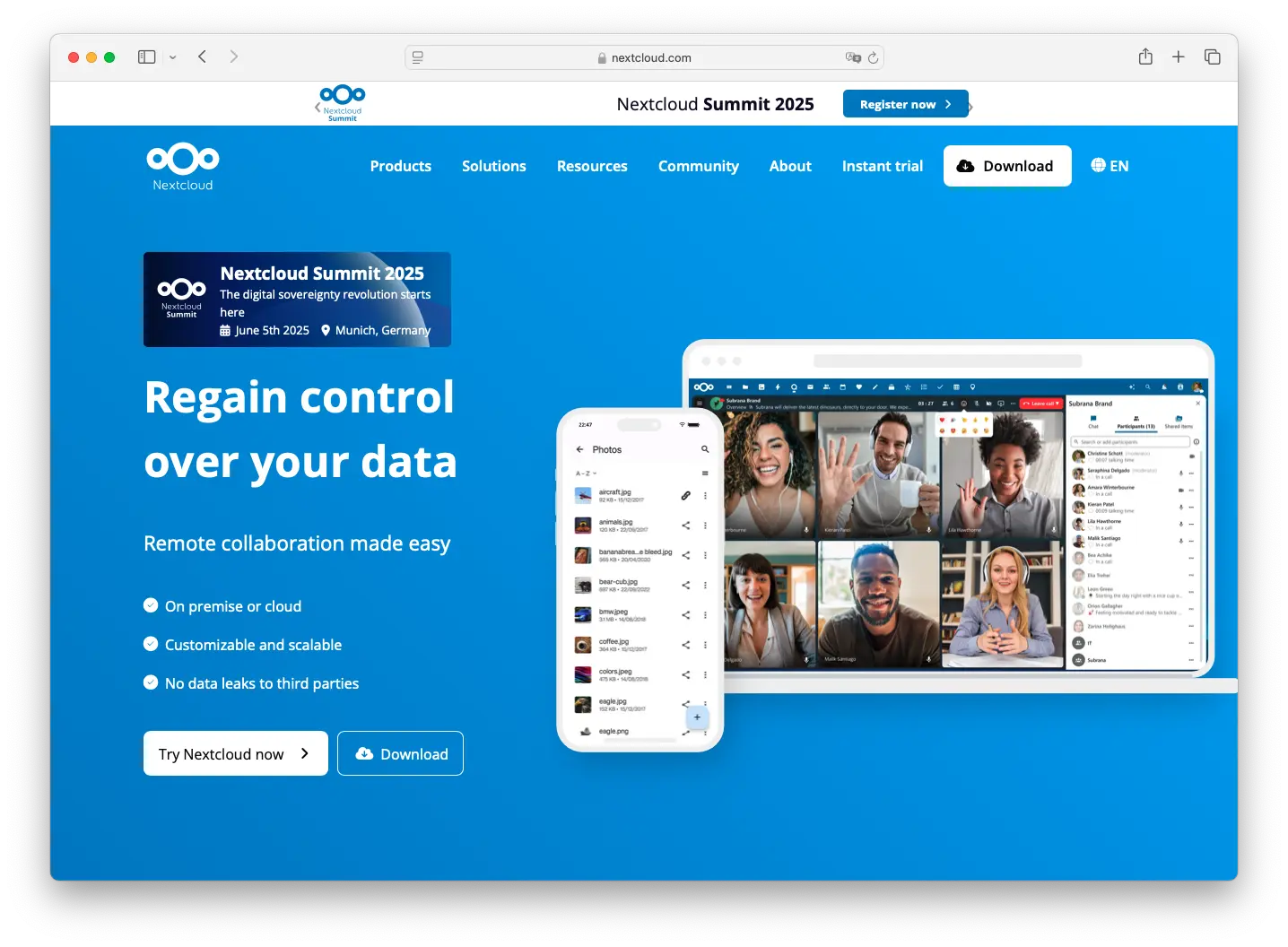
Nextcloud is the most popular self-hosted cloud platform, and it's not hard to see why. What started as a file sync tool has grown into a full collaboration suite with office documents, calendar, contacts, video calls, task management, and over 200 apps in its ecosystem. If Seafile feels too focused on just file sync, Nextcloud is the opposite end of the spectrum.
- Features: 200+ apps, built-in office suite (Nextcloud Office), E2E encryption, two-factor authentication, LDAP/Active Directory integration, federation between instances, file versioning, and real-time collaborative editing.
- Why you should use it: You want more than file sync. Nextcloud gives you a full Google Workspace or Microsoft 365 replacement you can self-host. The community is massive, documentation is solid, and there's an app for almost everything.
- Why not: It's resource-hungry. Large installations can feel sluggish, and maintaining all those features takes more effort than Seafile's lean setup. If all you need is fast file sync, Nextcloud is overkill.
- Pricing: Free (AGPL). Nextcloud Enterprise pricing on request.
Check out our Nextcloud alternatives comparison and our complete guide to self-hosting Nextcloud on Ubuntu.
2. ownCloud
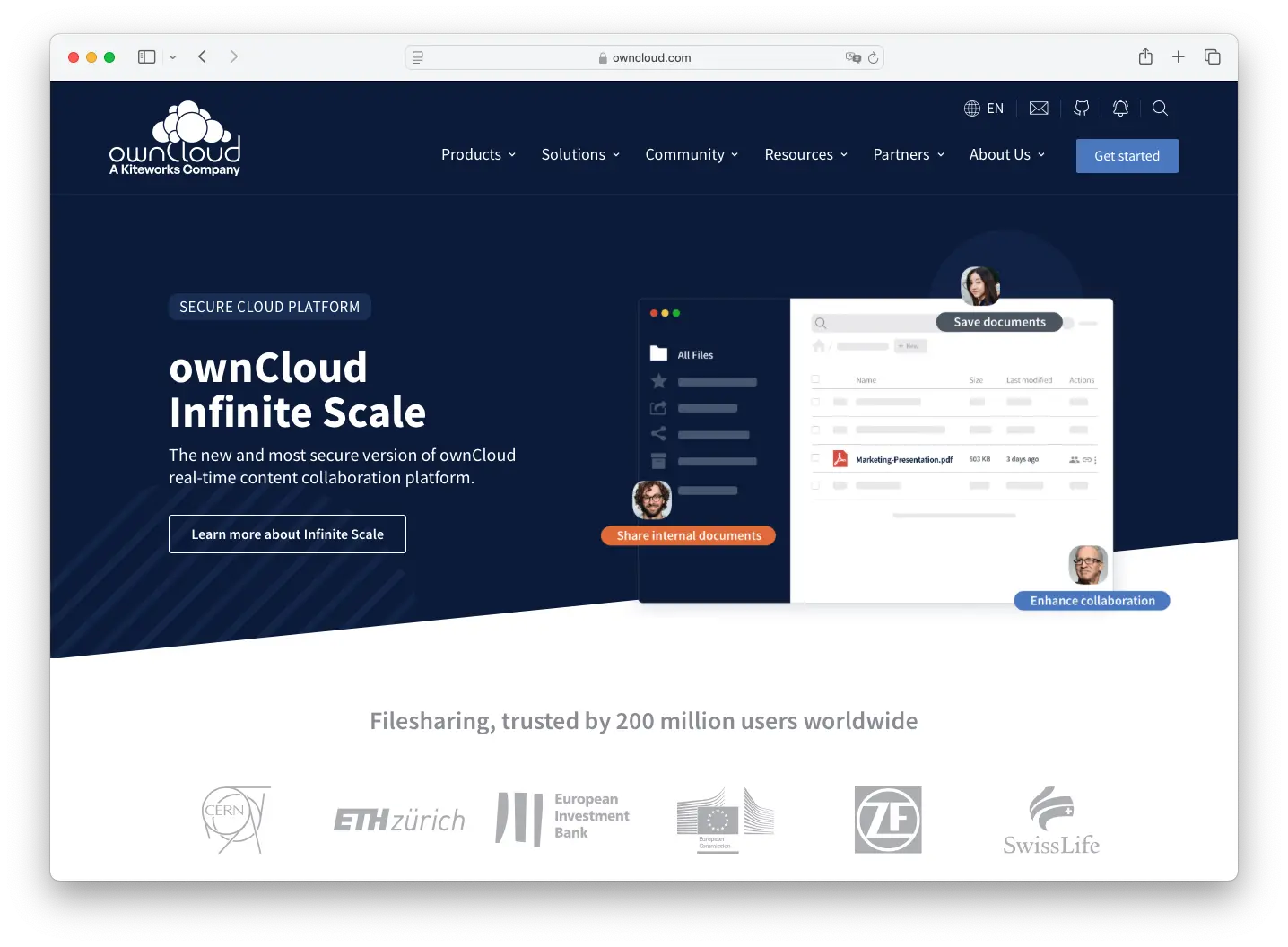
ownCloud is the platform Nextcloud originally forked from. While Nextcloud went broad with features, ownCloud stayed focused on file management and sharing. The big news is ownCloud Infinite Scale -- a complete rewrite in Go that's fast, lightweight, and designed for modern infrastructure.
- Features: File sync and sharing, encryption at rest, two-factor authentication, LDAP integration, spaces for project-based file organization, and the new Infinite Scale architecture built on microservices.
- Why you should use it: If you want solid file sync without the feature bloat of Nextcloud, ownCloud Infinite Scale is worth a look. It's faster and lighter than the old PHP version, and the "Spaces" concept makes organizing team files intuitive.
- Why not: The community is smaller than Nextcloud's. The acquisition by Kiteworks has created some uncertainty about the project's direction. Fewer third-party integrations than Nextcloud.
- Pricing: Free (community edition); Enterprise licensing available.
See our ownCloud alternatives comparison for more details.
3. Syncthing
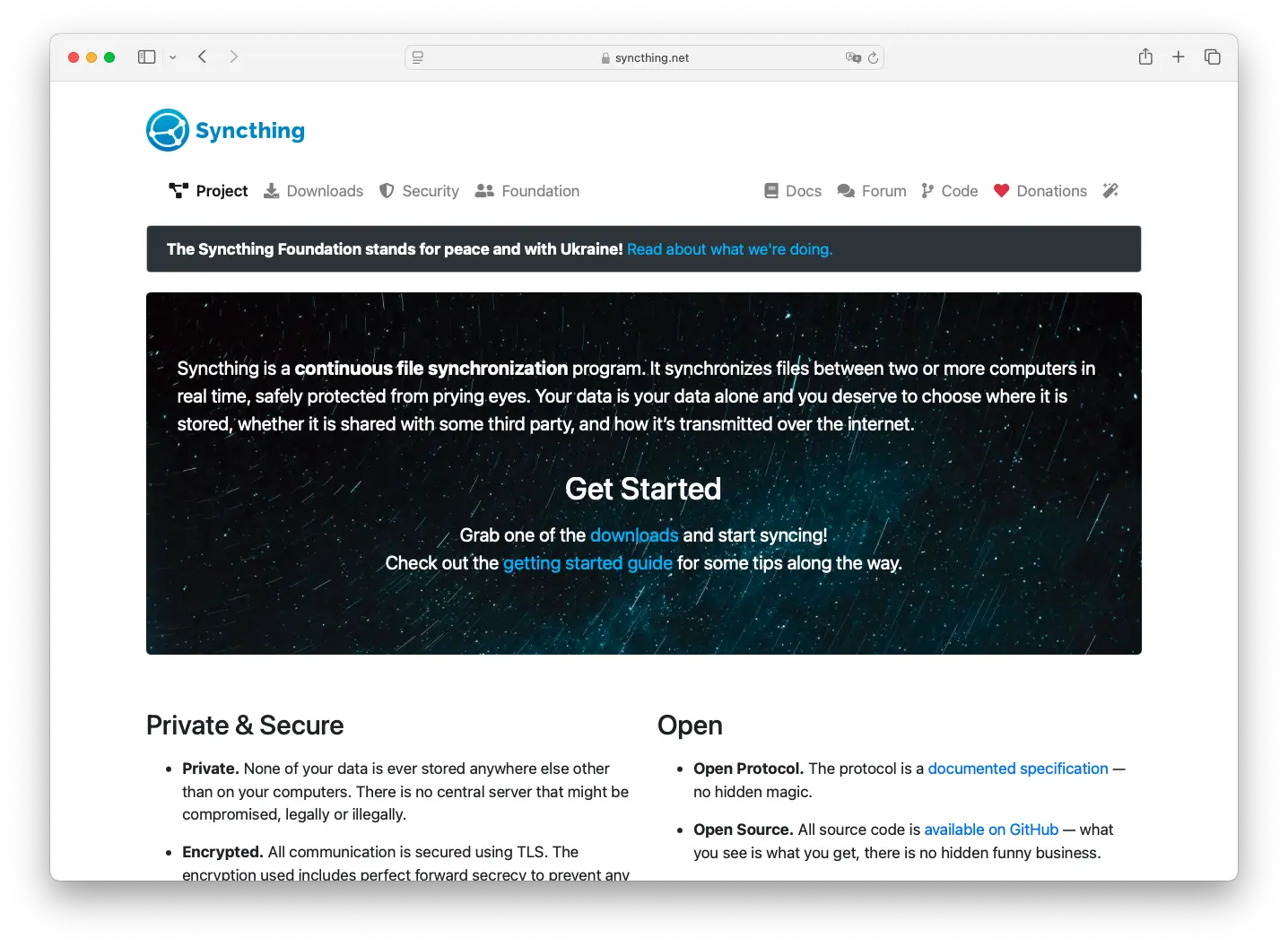
Syncthing takes a completely different approach. There's no central server at all -- files sync directly between your devices using peer-to-peer connections. Everything is end-to-end encrypted, and no data ever touches a third-party server. If privacy is your top priority, Syncthing is hard to beat.
- Features: Peer-to-peer file sync, end-to-end encryption, no central server required, cross-platform support (Linux, macOS, Windows, Android), open source, and conflict handling with file versioning.
- Why you should use it: If you want zero cloud dependency and maximum privacy. Your data never leaves your devices. No accounts to create, no servers to maintain, no vendor lock-in. It just works.
- Why not: No web UI for browsing files remotely. You can't share files with external users who don't have Syncthing installed. No central admin panel, so managing it across a team is painful. It's a sync tool, not a collaboration platform.
- Pricing: Free (MPL-2.0, fully open source).
Deploy Any File Sync Solution in Minutes
Setting up self-hosted file storage can be complex. With Sliplane, you can deploy Nextcloud, Seafile, or any Docker-based file sync solution in minutes:
- One-click deployments - No server configuration needed
- Automatic SSL certificates - Secure your data without hassle
- Persistent storage - Your files are safe with built-in volumes
- €9/month - Predictable pricing, no surprises
Deploy Your File Sync Solution →
4. Pydio
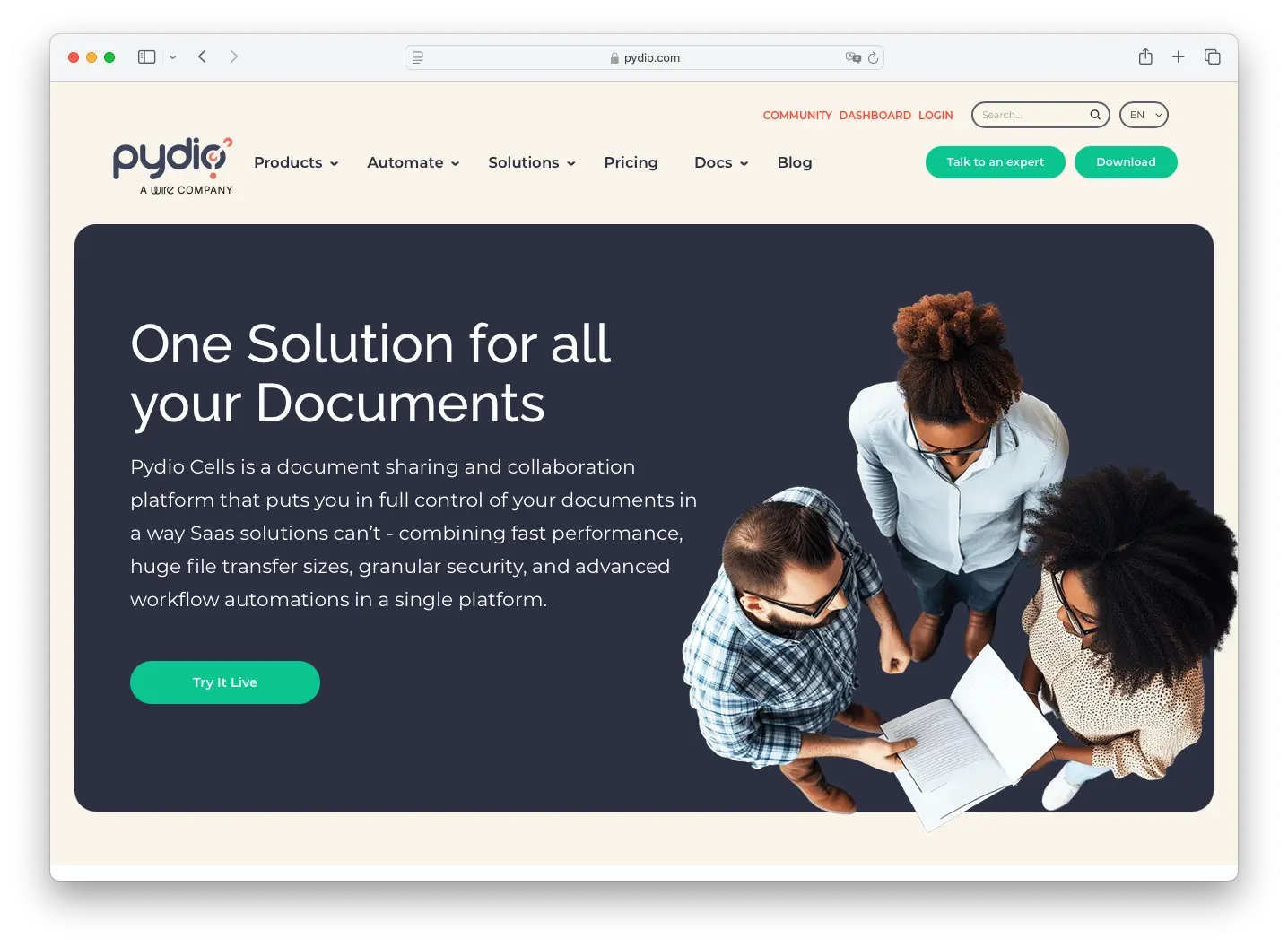
Pydio (specifically Pydio Cells) is built for enterprises that need secure file sharing with compliance and governance features baked in. Think healthcare, finance, legal -- industries where audit trails and granular access controls aren't optional but mandatory.
- Features: Advanced role-based access controls, detailed audit trails, workflow automation, encryption at rest and in transit, compliance tools, and a modern web interface built on microservices.
- Why you should use it: If you're in a regulated industry and need detailed audit logging, workflow automation, and enterprise-grade access controls. Pydio takes security and compliance seriously in a way that Seafile doesn't.
- Why not: It's overkill for personal use or small teams. The setup is more complex than Seafile, the community is smaller, and enterprise features come with enterprise pricing. If you just want to sync files between a few devices, look elsewhere.
- Pricing: Free (community edition, AGPL); enterprise pricing on request.
5. FileCloud
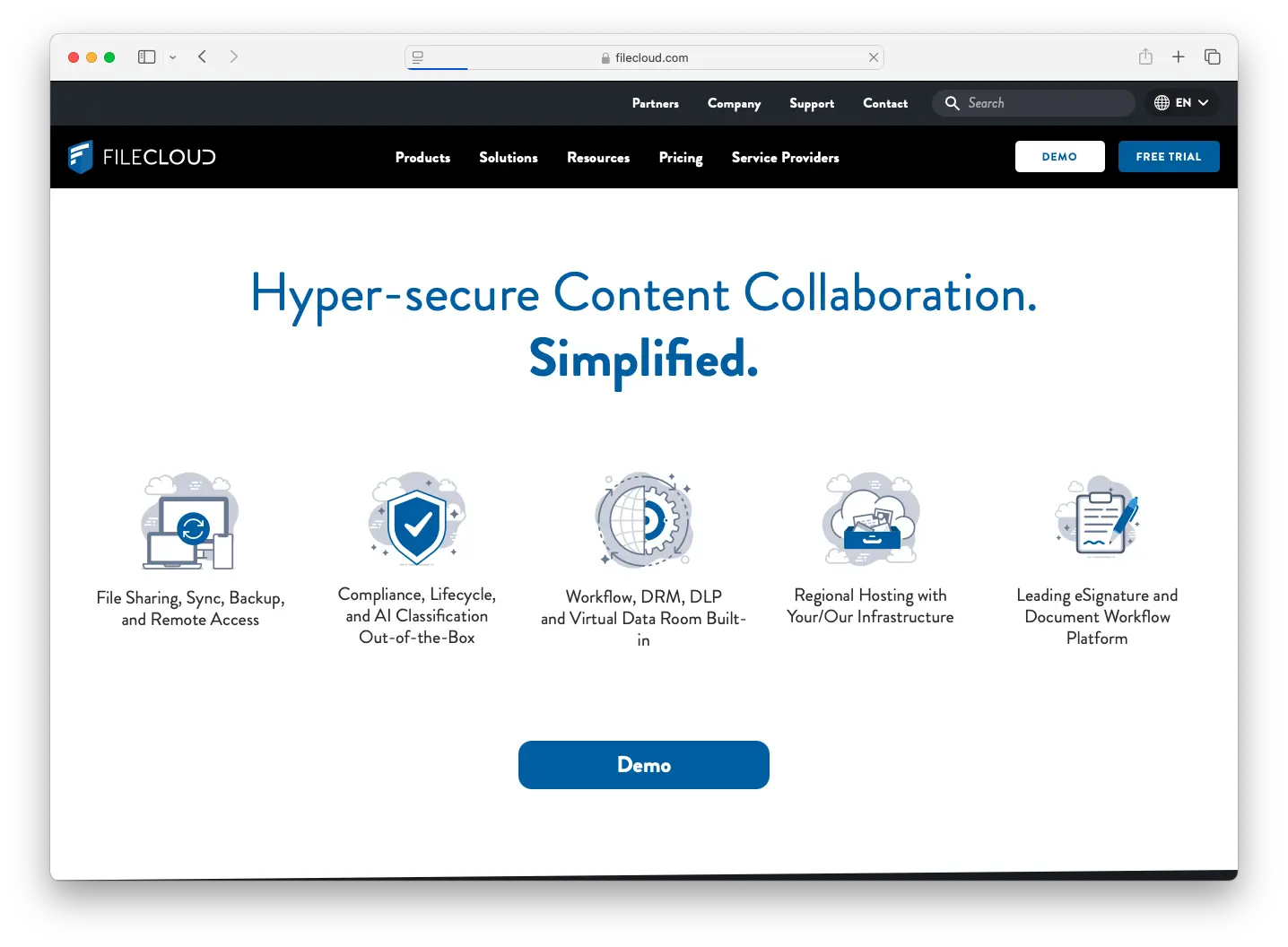
FileCloud is an enterprise file sharing platform with a strong focus on data loss prevention (DLP), compliance management, and governance. It's not open-source, but it offers self-hosted deployment alongside its cloud option, making it relevant for organizations that need to keep data on-premises.
- Features: Data loss prevention (DLP), compliance management and reporting, encryption at rest and in transit, two-factor authentication, NTFS permission integration, Active Directory support, and granular sharing controls.
- Why you should use it: If you're in a regulated industry (healthcare, finance, government) and need DLP, compliance reporting, and the ability to map existing NTFS permissions. FileCloud integrates well with Windows infrastructure in a way most open-source tools don't.
- Why not: It's proprietary and expensive. Starts at $10/user/month, which adds up fast. For personal use or small teams, it's way too much. If you prefer open-source solutions, this isn't for you.
- Pricing: Starts at $10/user/month; self-hosted licensing available.
Comparison
| Tool | Self-Hostable | Open Source | Best For | Ease of Use | Starting Price |
|---|---|---|---|---|---|
| Seafile | Yes | Yes (CE) | Fast file sync, large files | Medium | Free |
| Nextcloud | Yes | Yes (AGPL) | Full collaboration suite | Medium | Free |
| ownCloud | Yes | Yes (CE) | Focused file sync, Infinite Scale | Medium | Free |
| Syncthing | P2P | Yes (MPL-2.0) | Privacy-first, no server | Low-Medium | Free |
| Pydio | Yes | Yes (AGPL) | Enterprise compliance | Medium | Free |
| FileCloud | Yes | No | Enterprise DLP & governance | Medium-High | $10/user/month |
Conclusion
Each alternative serves a different need:
- Go with Nextcloud if you want a full collaboration platform that replaces Google Workspace or Microsoft 365. It does way more than file sync, but it also needs more resources.
- Pick ownCloud if you want focused file sync without the bloat, especially with the new Infinite Scale architecture.
- Choose Syncthing if privacy is everything and you don't need a central server or web UI.
- Use Pydio if you're in a regulated industry and need audit trails, workflow automation, and enterprise access controls.
- Consider FileCloud if you need DLP and compliance management with tight Windows/Active Directory integration.
That said, Seafile is still a great choice if raw file sync performance is your priority. It's lean, fast, and does one thing really well. But if you need more -- collaboration, compliance, or complete decentralization -- the alternatives above have you covered.
Want to self-host any of these? Sliplane makes it easy to deploy Docker-based file sync solutions in minutes, starting at €9/month. No complex server setup required.
Cheers,
Lukas