5 Awesome Drizzle Gateway Alternatives
 Yulei Chen
Drizzle Gateway is a free, self-hosted, browser-based database management interface built on Drizzle Studio. It lets you connect to PostgreSQL, MySQL, SQLite, and more from any browser, with schema visualization, query execution, and multi-database support. There's no official cloud offering - Drizzle Gateway is distributed as a free self-hosted tool only, so you'll need somewhere to run it.
Self-hosting on Sliplane is a great option if you want full control of your data, predictable performance, and zero vendor lock-in: deploy in one click for €9/month with no server management required. Check out our easy deploy guide to get started in minutes.
But maybe Drizzle Gateway isn't quite the right fit for your needs. Maybe you want something that works without ORM lock-in, supports more databases out of the box, or offers a spreadsheet-style interface for non-technical team members. Let's look at 5 awesome alternatives!
1. CloudBeaver
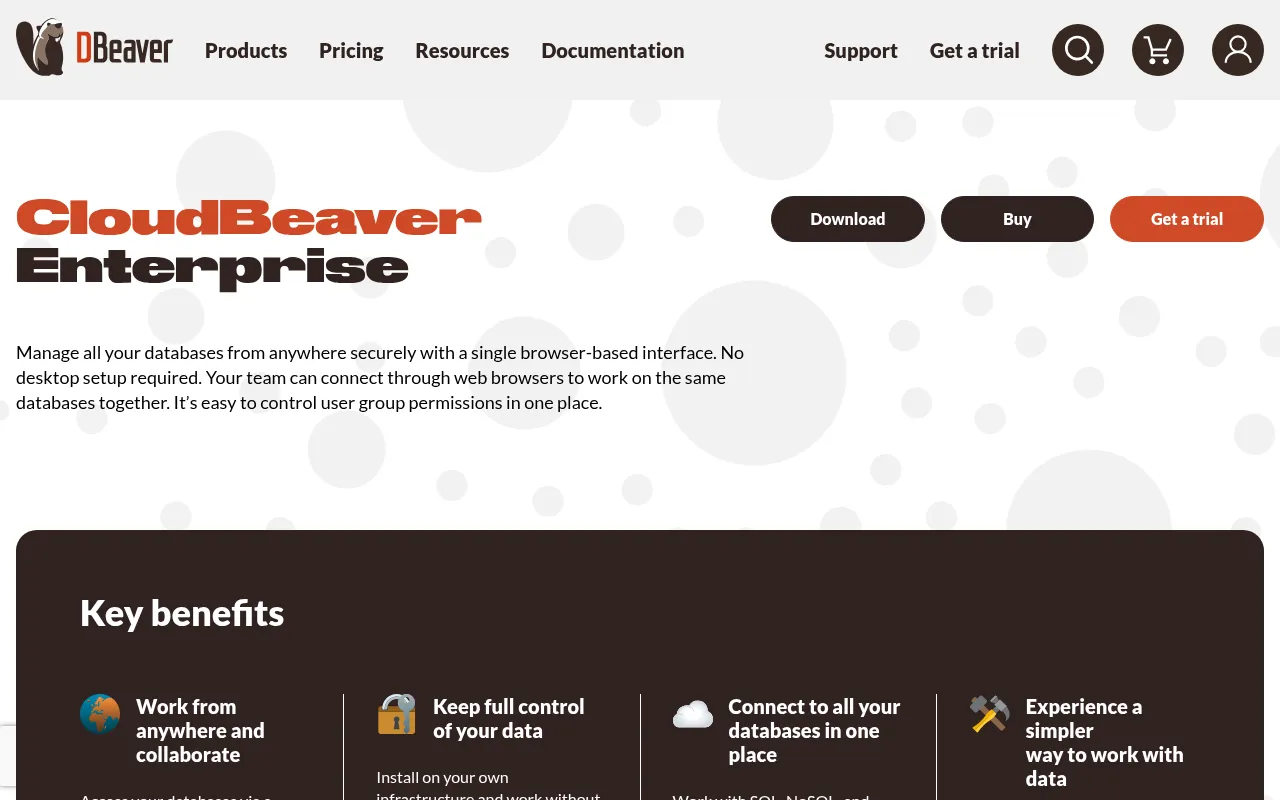
CloudBeaver is a web-based database management tool built by the DBeaver team. It brings the power of DBeaver's desktop client to the browser, supporting 80+ databases via JDBC drivers. Unlike Drizzle Gateway, CloudBeaver works with any database regardless of your ORM choice and offers team collaboration features out of the box.
- Features: SQL editor with smart autocompletion, data visualization, ERD diagrams, AI-assisted query generation, team query sharing, SSO/SAML/LDAP authentication, query audit trails, and support for 80+ databases including PostgreSQL, MySQL, MongoDB, and Oracle.
- Why You Should Use It: If you need a universal database GUI that your entire team can access through the browser without installing anything, CloudBeaver is excellent. The enterprise features like audit trails, SSO, and role-based access make it ideal for companies with compliance requirements. It also has no ORM dependency.
- Why Not: The Community Edition is more limited in database support and lacks collaboration features. Enterprise pricing is per-user and can get expensive for larger teams. It also requires more resources to run compared to Drizzle Gateway's lightweight Node.js container.
- Pricing: Free (Community Edition, Apache 2.0 license); Enterprise starts at ~$200/user/year with a minimum of 5 users. A 14-day free trial is available. Self-hosting the Community Edition is completely free.
2. Adminer

Adminer is the polar opposite of heavy database tools. It's a full-featured database management interface packed into a single PHP file (under 500 KB). Deploy it anywhere PHP runs, and you have instant access to MySQL, PostgreSQL, SQLite, MS SQL, Oracle, and more.
- Features: Table creation and modification, SQL query execution with syntax highlighting, data import/export (SQL, CSV, JSON), user privilege management, multi-database support, plugin architecture, customizable themes, and persistent login sessions.
- Why You Should Use It: If you want the lightest possible database admin tool that just works, Adminer is unmatched. Drop one file on any server with PHP and you're done. It's faster and more secure than phpMyAdmin, supports more database types, and has a cleaner interface. Perfect for quick database inspections during development or debugging.
- Why Not: Adminer is PHP-based, so you need a PHP runtime. The interface feels more utilitarian compared to modern tools like Drizzle Gateway. There's no built-in collaboration, no real-time schema visualization, and no API integration. It's a tool for getting things done, not for impressing stakeholders.
- Pricing: Completely free and open-source (Apache License + GPL). No paid tiers, no cloud offering. Self-hosting costs nothing beyond your server.
3. NocoDB
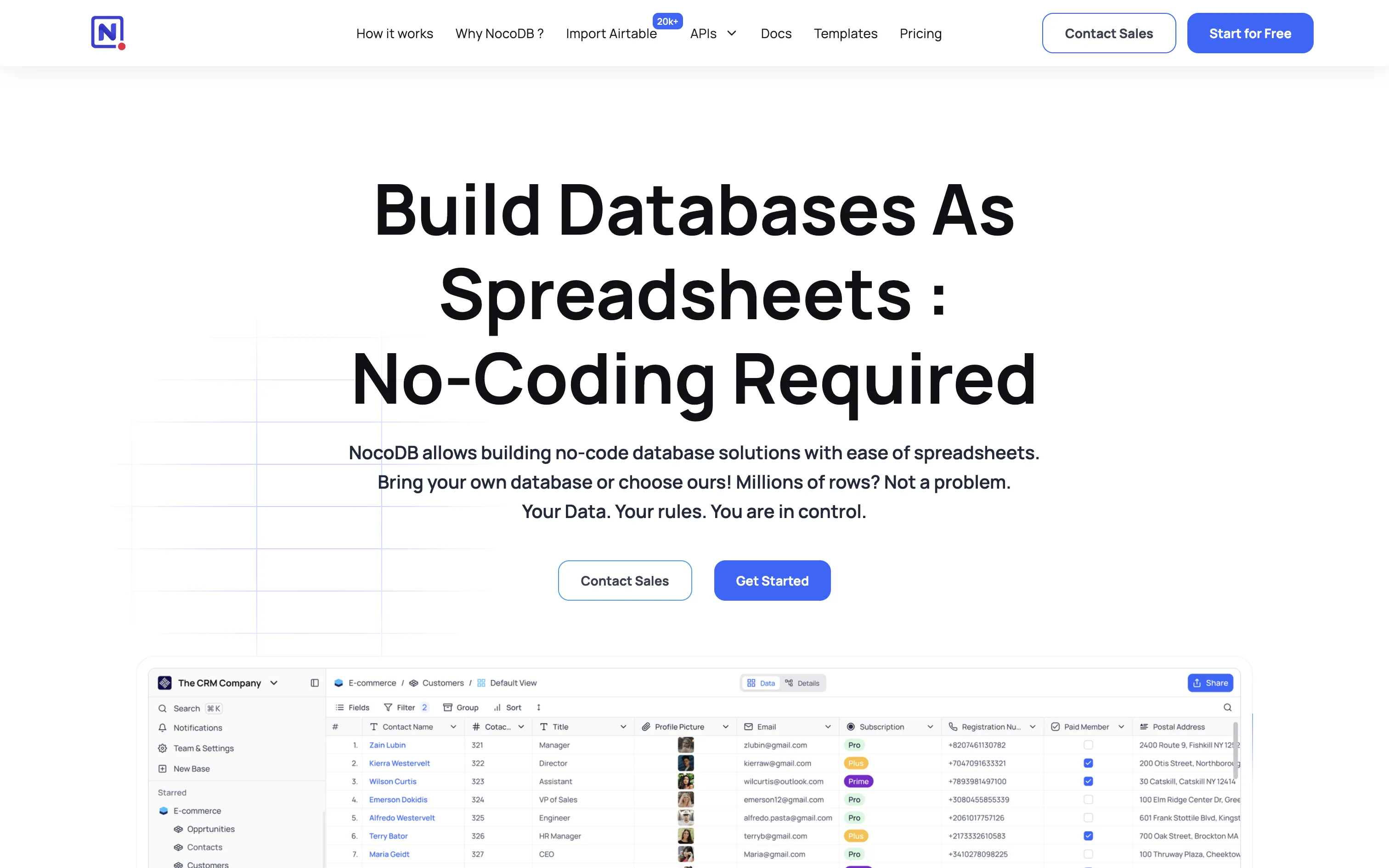
NocoDB takes a fundamentally different approach to database management. Instead of a traditional SQL interface, it wraps your existing database in a spreadsheet-like UI that non-technical team members can actually use. Connect it to PostgreSQL, MySQL, or SQLite and let your team browse, filter, and edit data without writing a single query.
- Features: Grid, kanban, gallery, and calendar views, automatic REST API generation, form builder, webhooks, role-based access control, field-level permissions, audit logs, and direct connections to external SQL databases.
- Why You Should Use It: If you need to give non-developers access to your database without the risk of raw SQL queries, NocoDB is perfect. Product managers can update records, support teams can look up data, and nobody needs to learn SQL. The automatic API generation is also great for building quick integrations on top of your data.
- Why Not: NocoDB is not a traditional database admin tool. You can't run arbitrary SQL queries, manage indexes, or handle complex schema migrations. If you're a developer who needs full database control, Drizzle Gateway or CloudBeaver will serve you better.
- Pricing: Free (open-source, AGPLv3) for self-hosting with unlimited users and storage. NocoDB Cloud starts at $12/seat/month (Plus) or $24/seat/month (Business). The "pay for 9, get unlimited" model caps costs for larger teams.
We have a detailed guide on self-hosting NocoDB if you want to try it out.
4. Directus
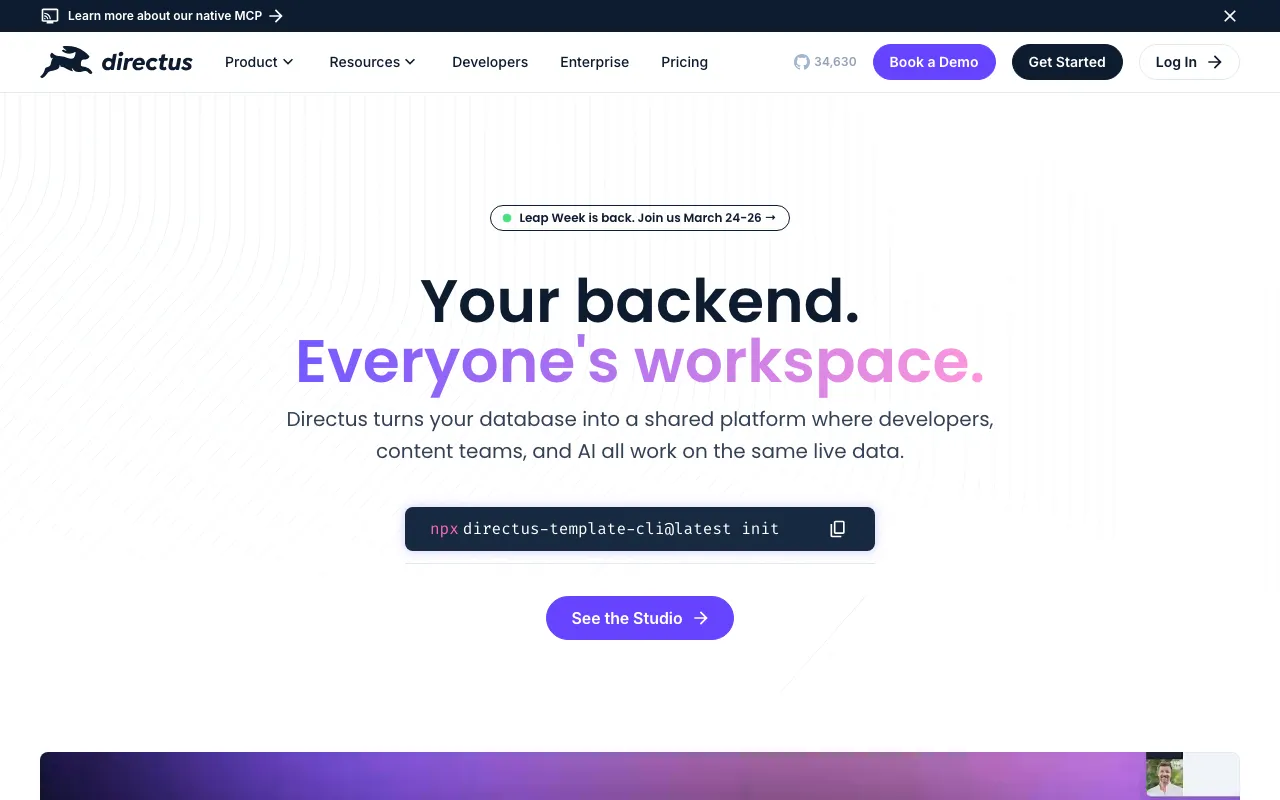
Directus wraps any SQL database with an instant REST and GraphQL API plus a polished admin interface. It's more than just a database viewer - it's a complete data platform that lets you define collections, relationships, and permissions through a visual interface while keeping your data in your own database.
- Features: Instant REST and GraphQL APIs, visual data studio, granular role-based permissions down to field level, automation flows, file asset management, webhooks, custom dashboards, and support for PostgreSQL, MySQL, SQLite, MariaDB, MS SQL, and more.
- Why You Should Use It: If you need both a database management interface and an API layer for your applications, Directus gives you both in one package. The permission system is incredibly granular, the admin UI is polished enough for non-technical users, and you keep full ownership of your data schema. It's especially powerful as a headless CMS backed by your existing database.
- Why Not: Directus is heavier than a pure database admin tool. If you just need to run SQL queries and inspect schemas, it's overkill. The learning curve is steeper, and the resource requirements are higher than lightweight alternatives like Adminer or Drizzle Gateway.
- Pricing: Free for self-hosting (BSL license, free for organizations under $5M revenue). Directus Cloud starts at $99/month. Enterprise licensing is required for larger organizations.
Check out our guide on self-hosting Directus the easy way for a quick setup, or explore Directus alternatives if you want to compare more options.
5. Beekeeper Studio
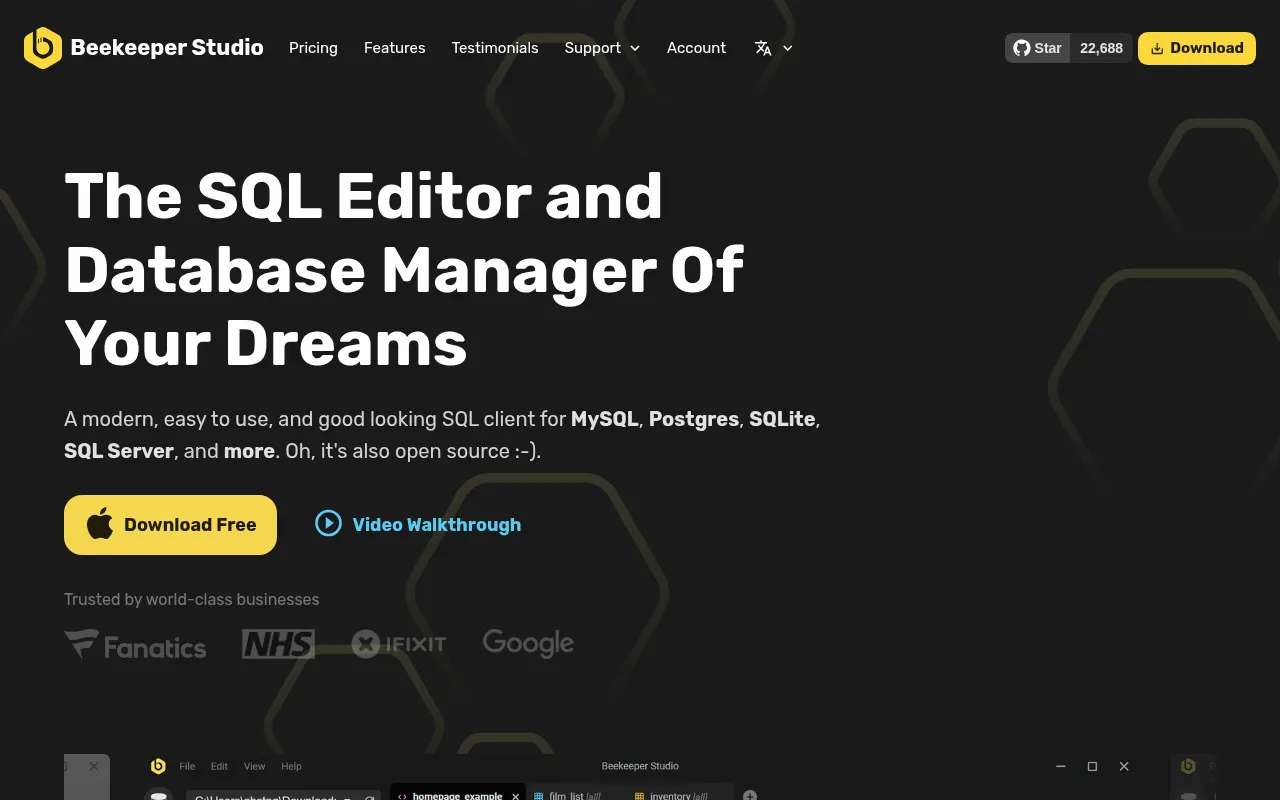
Beekeeper Studio is a modern, privacy-focused SQL client available for Windows, macOS, and Linux. While it's primarily a desktop application, its cloud workspaces feature enables team collaboration. The clean interface and AI-powered query assistance make it one of the most developer-friendly database tools available.
- Features: SQL editor with AI assistance, spreadsheet-like table editing, ERD viewer, data import/export (CSV, JSON, SQL), SSH tunneling, SSL encryption, table creator with no-code interface, cloud workspaces for team sharing, and support for PostgreSQL, MySQL, SQLite, SQL Server, Redis, MongoDB, and more.
- Why You Should Use It: If you prefer a native desktop experience over browser-based tools, Beekeeper Studio delivers the best modern SQL client UX available. The AI Shell can explore your schema and generate queries, the interface is clean and fast, and the privacy-first approach means no telemetry or data collection. It's fully offline-capable too.
- Why Not: Beekeeper Studio is primarily a desktop app, not a web-based tool you can share via URL like Drizzle Gateway or CloudBeaver. While cloud workspaces exist, they're not a full replacement for a self-hosted web UI. The free Community Edition is also quite limited compared to the paid version.
- Pricing: Free (Community Edition, GPLv3); Pro starts at $7/month with AI features, cloud workspaces, and additional database support. A 14-day free trial is available. Enterprise starts at $4,999/month.
Conclusion
| Tool | Best For | Ease of Setup | Focus | Cloud Pricing |
|---|---|---|---|---|
| Drizzle Gateway | Drizzle ORM users, lightweight web GUI | Easy | Schema browsing, queries | $20/year + $10/slot |
| CloudBeaver | Teams needing browser-based SQL access | Moderate | Universal SQL client | ~$200/user/year (Enterprise) |
| Adminer | Quick database admin, minimal setup | Very Easy | Admin tasks, imports/exports | Free (open-source only) |
| NocoDB | Non-technical users, spreadsheet interface | Easy | No-code data management | $12/seat/month (Plus) |
| Directus | API + admin UI combo, headless CMS | Moderate | Data platform, APIs | $99/month (Cloud) |
| Beekeeper Studio | Developers wanting a native SQL client | Easy | SQL editing, ERDs | $7/month (Pro) |
Each tool fills a different gap: CloudBeaver for universal browser-based access, Adminer for ultralight server admin, NocoDB for spreadsheet-style team access, Directus for API-first data platforms, and Beekeeper Studio for a polished desktop SQL experience.
Drizzle Gateway remains an excellent choice if you're already in the Drizzle ecosystem and want a lightweight, self-hosted database GUI. But if you need broader database support, team collaboration, or a different interface paradigm, one of these alternatives might be a better fit.
Related guides you might find useful: